• Sheet Pan Crisp Tofu and Sweet Potatoes from NYT’s Melissa Clark

    Sheet Pan dinners seem to be everywhere lately! This one from cookbook author (this one-Dinner in French-is my favorite) and food writer Melissa Clark uses two of my go-to ingredients: tofu and sweet potatoes. We eat tofu frequently, but usually just in stir-fry recipes; this one promised something more interesting, and it sure did deliver! Because there are just two of us at home, I opted for making the whole amount (4 servings) of the tofu and half (2 servings) of the sweet potatoes. That turned out to be a good idea: the leftover tofu was easily reheated and added to salads for the next day’s lunch. Delicious!

    Sheet Pan Crisp Tofu and Sweet Potatoes (Melissa Clark, New York Times)

    Ingredients:

    • 1 (14-ounce) package extra-firm tofu, cut crosswise into 4 1-inch thick slices
    • 2 tablespoons peanut oil, plus more as needed (I used coconut oil which was had on-hand)
    • 2 tablespoons tamari
    • 1 ½ teaspoons honey
    • 1 tablespoon plus 1 teaspoon rice wine vinegar
    • 1 tablespoon cornstarch
    • 4 medium sweet potatoes (about 8 ounces each), cut lengthwise into 3/4-inch wedges
    • ½ teaspoon kosher salt, plus more to taste
    • ¼ teaspoon black pepper
    • 4 scallions, cut into 3-inch pieces and thinly sliced lengthwise
    •  Large pinch of sugar
    • ½ cup cilantro leaves
    •  Hot sesame chile oil, or red-pepper flakes, for serving
    •  Salted, roasted peanuts, for serving (optional)

    Method:

    1. Heat oven to 400 degrees.
    2. Do not skip this step! Arrange tofu pieces, cut sides down, on a clean kitchen towel or paper towels. Cover with another kitchen towel, and place a flat cutting board on top. If your cutting board is lightweight, stack a few cans or a skillet on top to weigh it down. Let tofu drain for at least 10 minutes (and up to 30 minutes), then transfer to a cutting board. Cut strips into 3/4-inch pieces (1-inch thick), and transfer to a medium bowl.
    3. In a small bowl, whisk together oil, tamari, honey and 1 teaspoon vinegar. Toss half the mixture with the tofu, then toss in cornstarch. Arrange in a single layer on a rimmed sheet pan.
    4. On a separate rimmed sheet pan, toss together potato wedges, 1/2 teaspoon salt and pepper. Arrange in a single layer; do not crowd the pan. If they don’t all fit, arrange extra wedges on the pan with the tofu.
    5. Bake tofu and potatoes until browned, 35 to 40 minutes, flipping them halfway through. If the tofu sticks (and this is likely), use a thin metal spatula to carefully loosen each one before flipping. A small offset spatula is perfect here.
    6. Meanwhile, in a medium bowl, combine scallions, 1 tablespoon vinegar and a large pinch each sugar and salt. Let sit while tofu and potatoes roast.
    7. To serve, toss tofu with some of the reserved tamari sauce, to taste. Serve with potato wedges, topped with scallions, cilantro and a drizzle of hot sesame chile oil or sprinkling of red-pepper flakes, and more tamari sauce. Sprinkle with peanuts if desired.

    For Noomers: Calories=298, Fat=11g; Carbs=40g; Sugar=10g; Protein=12g, Sodium=843
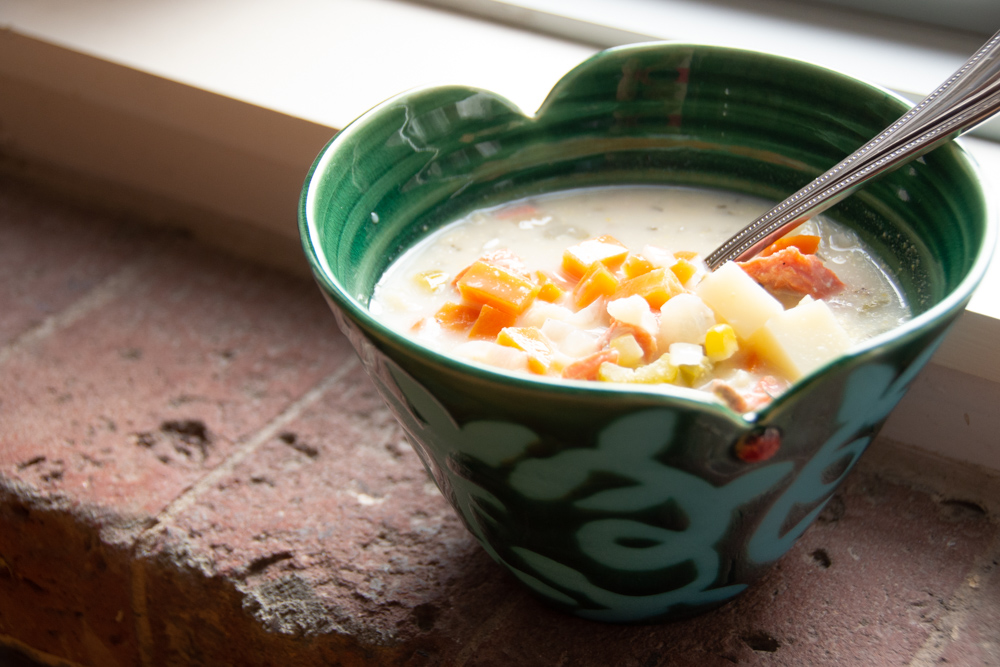
  • Seattle Smoked Salmon Chowder from Skinny Taste

    Winter has been continuing to hold an ice-cold grip on temperatures, so this week I felt the need to make a bowl of comfort food. This smoked salmon chowder from Skinny Taste was exactly what I was looking for! The balance between lower fat milk (I used the 1% we normally have on hand and not whole milk) and the rich flavor of smoked salmon was the warming antidote to the blast of arctic air. Skinny Taste’s original recipe gives directions for both stove-top and Instant Pot; I chose the stove-top which didn’t seem to be that much of a time problem. Visit the recipe’s original post for the Instant Pot directions.

    The soup was served up in one of my favorite pieces – a handmade ceramic bowl made by one of Adrien’s former artist neighbors at Western Avenue Studios in Lowell – Liz Rodriguez. Liz’s ceramic pieces are beautiful and unique and some of my most treasured pieces for serving. You can learn more about Liz at her website Liz Rodriguez Ceramics.

    Skinny Taste’s Seattle Smoked Salmon Chowder

    Ingredients

    •  2 tablespoons unsalted butter (I substituted coconut oil)
    • 1 medium yellow onion, diced
    • 3 medium carrots, ½-inch dice
    • 3 large celery stalks, ½-inch dice
    • 2 garlic cloves, minced
    • 2 teaspoons kosher salt
    • 2 tablespoons all-purpose flour
    • ½ cup white wine, such as Sauvignon Blanc
    • 1 teaspoon dry thyme
    • 3 cups reduced sodium chicken broth (No chicken broth? Not to worry – I used water, but veg broth also nice)
    • 1 12-ounce wedge cauliflower (1/4 of a large head), stem attached
    • 3 small red potatoes, peeled and diced into ½ inch pieces
    • 1 cup frozen corn kernels
    • 2 cups whole milk (substituted the low-fat milk we had on hand)
    • Freshly ground black pepper
    • 8 ounces skinless hot-smoked salmon
    • Chopped chives, for garnish

    Method – Stove Top (See Skinny Taste website for Instant Pot directions)

    1. In a large (Dutch oven or ) heavy pot, melt butter over medium heat.
    2. Add the onion, carrots, celery, garlic and ½ teaspoon salt and sauté until vegetables start to soften, about 5 minutes.
    3. Sprinkle flour evenly over vegetables and cook, stirring often, for 1 minute.
    4. Add wine and deglaze the pot.
    5. Add the thyme, broth, cauliflower and potatoes, bring the pot to a boil, then reduce heat to simmer, cover and cook for 20 minutes.
    6. Remove the lid from pot and transfer the cauliflower (I used frozen because THAT’s what we could access) and 1 cup of the soup to a blender and blend until smooth. Transfer puree back to the pot. (I skipped the blending because I prefer the chunkiness)
    7. Add the milk, corn, and smoked salmon and heat through for about 5 minutes.
    8. Season with remaining salt and freshly ground pepper, to taste.
    9. Ladle 2 cups of soup into each bowl and top with chives

    For Noomers:

    Calories = 377, Carbs = 38, Protein = 31, Fat = 11.5, Sugar = 9, Sodium = 783

  • The Washington Post has started a new email newsletter authored by WaPo’s food writer, Daniela Galarza called Eat Voraciously and the very first email was – as Guy Fieri might say – “off the hook”. Use this link to read more about Daniela’s mission and subscribe to receive the newsletter – or even better, subscribe to the Post.

    This Picadillo recipe has many different and tasty variations. It can be vegetarian, vegan, meaty…. whatever hits you at the moment. I also appreciated that the many cubes of Sofrito, a result of this summer’s foray into CSA shares and aji dulce peppers, could be utilized to make the food prep even faster. As both of us like our food hot and spicy, we took the liberty of serving Craic Sauce’s Mill City Red on the side. To read more about this locally produced line of hot sauces, visit Craft Hot Sauce to read and hear more about creator, Brian Ruhlmann or look for Craic’s Sauce and where it’s available on social media.

    Eat Voraciously’s Picadillo Recipe

    Ingredients (Read Daniela’s original post for more ideas)

    • 2 tablespoons olive oil
    • 1 small yellow onion (4 to 5 ounces), finely chopped
    • 1/2 bell pepper, any color, finely chopped (optional)
    • 5 stems fresh cilantro and their leaves, chopped
    • 2 garlic cloves, minced
    • 1 pound lean ground beef (I used ground turkey)
    • 1/2 teaspoon fine sea salt or table salt, plus more as needed
    • 1 teaspoon ground cumin
    • 1/2 teaspoon paprika (any kind) (I used a hot paprika)
    • 1/2 teaspoon dried oregano
    • 1/4 teaspoon ground black pepper
    • 1 (15-ounce) can crushed or diced tomatoes, preferably with no salt added
    • 2 tablespoons tomato paste
    • 1/4 cup dark or golden raisins (optional) (I would say, don’t skip unless you dislike raisins)
    • 1/4 cup pimento-stuffed green olives, halved (optional) (I would say, don’t skip unless you dislike olives)
    • Steamed rice for serving (optional)

    Method

    1. In a wide skillet over high heat, heat the oil until it shimmers. Add the onion and bell pepper, if using, and cook, stirring often, just until they begin to brown, about 3 minutes. Lower the heat to medium and add most of the cilantro — reserving a few leaves for garnish — garlic and ground beef. Using a wooden spoon or spatula, break the ground beef into bits so that it cooks evenly. Stir in the salt, cumin, paprika, oregano and black pepper.
    2. Cook the beef until its fat has rendered and it’s brown with a few pink spots, 5 to 8 minutes. (Drain excess fat, if desired.) Stir in the tomatoes and tomato paste. Bring to a simmer and cook over medium heat for another 5 minutes, using a spoon or spatula to break up any large chunks of tomato. (If the mixture starts to look dry, add a splash or two of water to loosen it.)
    3. Stir in the raisins and olives, if using, and simmer until they’ve softened, 3 or 4 minutes. Taste and adjust seasonings, keeping in mind that the raisins add a little sweetness and the olives add salinity and a touch of acidity. Garnish with the reserved cilantro leaves and serve the picadillo hot, with cooked rice.

    For my Noomer friends: (Based on 6 servings, excluding rice): Calories: 249; Protein: 15g; Carbohydrates: 8g; Fat: 20g; Saturated Fat: 6g; Cholesterol: 54mg; Sodium: 259mg; Fiber: 3g; Sugar: 4g.

  • Like most everyone, our Valentine’s Day celebration was quite a bit different this year. And so, embracing the change, we moved away from the usual big meal and headed toward something entirely out of our usual taste profiles. Depending on the culture, a koftas is a meatball or meatloaf dish, mainly found in Middle Eastern or the Indian subcontinent. Read more about that here.

    The dish we prepared for each other for Valentine’s Day 2021 comes from a New York Times recipe shared by Nik Sharma, a Los Angeles based blogger, food writer and cookbook author. You can find out more on Nik’s website, A Brown Table. We substituted ground turkey for the chicken, but I would imagine either will be delicious.

    So, here’s our Ode to a Different Valentine’s Day: Chicken Koftas with Lime Couscous. It was delicious – and even better the second day.

    Chicken Koftas with Lime Couscous by Nik Sharma

    Ingredients for Couscous

    • 1 ½ cups low-sodium chicken stock
    • 2 tablespoons lime juice, plus 1/2 teaspoon lime zest
    • 1 tablespoon extra-virgin olive oil
    • 1 teaspoon red-pepper flakes
    •  Fine sea salt and freshly ground black pepper
    • 1 cup couscous
    • ¼ loosely packed cup chopped flat-leaf parsley leaves
    • ¼ cup dried sweet-tart cherries or cranberries (We used dried cranberries – already in the pantry)
    • 3 tablespoons toasted pine nuts

    Ingredients for Koftas

    • 1 pound ground chicken or turkey (we used turkey this time)
    • 2 shallots, peeled and minced
    • 1 large egg, lightly whisked
    • 2 tablespoons chopped flat-leaf parsley leaves
    • 1 serrano chile, trimmed and chopped
    • 4 garlic cloves, peeled and minced
    • 2 tablespoons peeled and grated fresh ginger
    •  Fine sea salt and freshly ground black pepper
    •  Olive oil
    • 1 lime, cut into wedges, for serving

    Method:

    1. Make the couscous: In a medium saucepan over high heat, bring the stock, lime juice, olive oil, red-pepper flakes and 1 teaspoon salt to a rolling boil. Remove from the heat and stir in the couscous. Cover with a lid and let sit for 10 minutes.
    2. As the couscous sits, prepare the koftas: Place the ground chicken, shallots, egg, parsley, serrano, garlic, ginger, 1 teaspoon salt and 1 teaspoon pepper in the bowl of a food processor and pulse until the mixture resembles a coarse paste. (One suggestion from a cook on the NYT website was to forego processing. We thought that the extra pulsing made the Koftas well-blended and was worth the extra time/step)
    3. Frying the koftas: Heat 2 to 3 tablespoons of olive oil in a large (12-inch) cast-iron skillet or nonstick pan over medium-low. Grease your hands with a little oil and divide and shape the ground chicken mixture into 12 balls. Fry them in the hot oil, in batches if necessary, until golden brown on all sides and the internal temperature reads 165 degrees on an instant-read thermometer, about 8 to 10 minutes. Using a slotted spoon, transfer the koftas to a tray or plate lined with paper towels. (Another commenter on NYT suggests baking the Koftas – 15 mins. at 350 F. Whatever the method, make sure that the meat is cooked to 165 F)
    4. Finishing and plating: Uncover the couscous, fluff the mixture with a fork and break up any lumps. Transfer the couscous to a large mixing bowl. Fold in the lime zest, parsley, cherries and pine nuts, then season to taste with salt and pepper. Fold in the koftas and serve immediately with the lime wedges.
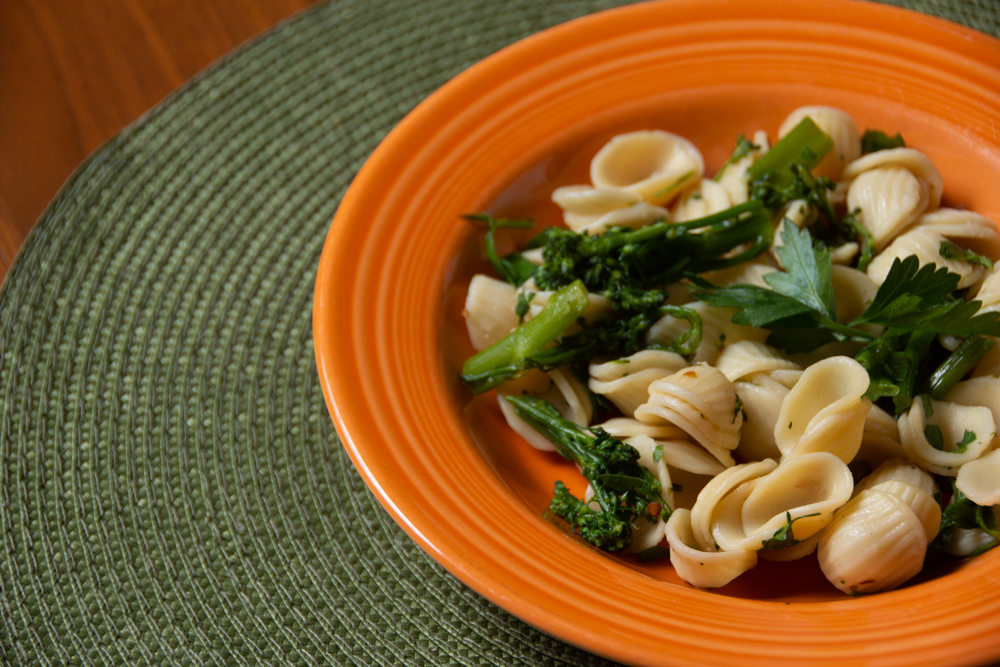
  • Vegan Garlic Pasta with Broccoli Rabe

    Recently, I’ve discovered a treasure trove of vegan recipes created by Vaishali on Holy Cow Vegan’s website. In trying to eat more plant based foods, this website has some wonderfully creative recipe takes on old and new favorites. This week’s shared recipe came together quickly – a good thing for weeknights – and with the addition of a few capers just before serving, was an healthy, elegant meal. With a nod toward food shopping in a pandemic, I substituted Oricchiette pasta which was opened in my pantry for the spaghetti in Vaishali’s original recipe.

    Vegan Garlic Pasta with Broccoli Rabe

    Ingredients

    • 1 16-oz package of spaghetti or any other pasta (I used oricchiette)
    • 1 large bunch of broccoli rabe
    • 6 large cloves garlic, smashed and sliced thinly
    • 1 TBSP extra virgin olive oil
    • 1 tsp red pepper flakes (or a bit more if you like things on the hotter side)
    • Salt and pepper to taste
    • 1/4 cup parsley chopped (optional)
    • ALSO OPTION SUGGESTIONS FROM VAISHALI: dash of lemon juice and/or a handful of capers

    Method

    1. Bring a large pot of salted water to boil. Add broccoli rabe and cook for two minutes. Remove (don’t drain! use a slotted spoon) the broccoli rabe to a chopping board, chop (I made 1 1/2 inch cuts) and set aside. Cook the pasta in the same water according to package directions.
    2. Heat the oil in a large saucepan. Add the garlic and saute until it starts to turn light gold.
    3. Add the red pepper flakes, the broccoli rabe, and salt & pepper (to taste). Stir-fry for 4 to 5 minutes.
    4. Add the pasta with a cup of the pasta cooking water. Add the (optional, but I’d suggest not skipping) parsley, stir well to mix, check seasoning and turn off heat. (Here’s where to add lemon or capers if using).
    5. Serve warm or at a room temperature.

    For Noomers:

    Calories 277, Carbs 49.3 g, Protein 14.3 g, Fat 3.6 g, sugar 2.4 g

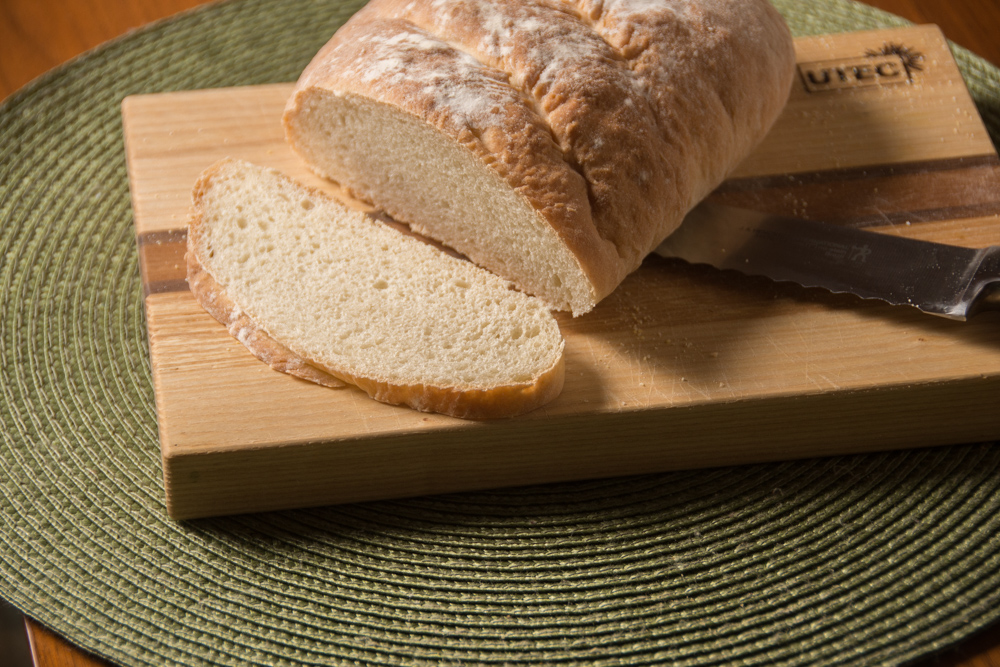
  • According to King Arthur Baking Company, this is the Easiest Loaf of Bread You’ll Ever Bake. I don’t know if every bread baker will agree with that sentiment, but it certainly is not complicated and turns out a delicious pair of loaves that stayed fresh for the couple of days that we consumed it (one frozen for later).

    Two things I have learned about bread baking: one is to use a scale for measuring and this cannot be over-stated. I like consistency from bake to bake especially after investing time in a bread recipe. Getting a food scale has been a game-changer for me. Second, do not short-cut kneading. In addition to getting the elasticity of the dough right, it’s a great (COVID) stress reliever.

    So with that in mind, here’s the Easiest Loaf of Bread You’ll Ever Bake, courtesy of the folks at King Arthur Baking.

    Easiest Loaf of Bread You’ll Ever Bake

    Ingredients

    • 4 1/2-5 cups (542g to 600g) Unbleached Flour (I use King Arthur All Purpose)
    • 1 TBSP (11g) sugar
    • 2 1/4 tsp instant yeast
    • 2 1/2 tsp (15g) table salt – not Kosher
    • 1 2/3 cups (379g) water, lukewarm (90-110 degrees F)
    • Cornmeal for coating the pan

    Method

    1. Weigh your flour (my recommendation); or measure it by gently spooning it into a cup, then sweeping off any excess.
    2. Stir together all of the ingredients (except the cornmeal) in a large bowl, starting with 4 1/2 cups of the flour (or 542g if weighing). Use a sturdy spoon, or your stand mixer equipped with the beater paddle (I used the mixer throughout). Mix until everything comes together in a rough, shaggy mass of dough.
    3. If you’re kneading the dough by hand, turn it out onto a lightly floured surface, using some of the additional 1/2 cup of flour called for. Fold the far edge of the dough back over on itself towards you, then press it away from you with the heels of your hands. Rotate the dough 90°. Repeat this fold-press-rotate process with a rhythmic, rocking motion for about 6 minutes. When fully kneaded, the dough will be bouncy and smooth.
    4. If you’re using your stand mixer, switch to the dough hook and knead the dough at medium speed for about 7 minutes, until it’s smooth, elastic, and feels a bit bouncy. If the dough doesn’t form a ball that clears the sides of the bowl, sprinkle in just enough of the additional flour to make this happen.
    5. Place the dough in a bowl that’s been lightly greased with vegetable oil or cooking spray; the bowl you started with is fine (not a fan of dried bits of bread dough, so I used a new bowl). Cover the bowl with plastic wrap or another airtight cover, and let the dough rise at room temperature until it’s doubled in size, about 1 to 2 hours. If your kitchen is particularly cold (below 65°F), place the bowl of dough in your turned-off oven with the oven light on (or, if your stove has a PROOFING setting, use it).
    6. Gently deflate the dough and cut it in half. Pat each half into a rough 6” x 8” oval.
    7. Working with one piece of dough at a time, grab a short side and fold the dough like a business letter (one short side into the center, the other short side over it). Use the heel of your hand to press the open edge of the “letter” closed. Gently pat and roll the dough into a log about 10” long. Repeat with the remaining piece of dough.
    8. Place the loaves, seam-side down, on a baking sheet (lined with parchment if desired). Sprinkle the pan (or parchment) generously with cornmeal; this will keep the bread from sticking and give it a crunchy bottom crust.
    9. Let the loaves rise, lightly covered with greased plastic wrap, for 45 minutes. They should become nicely puffy. Gently poke your index finger into the side of one of the loaves; if the indentation remains, your bread is ready to bake.
    10. Towards the end of the rising time, preheat the oven to 450°F.
    11. For extra-crusty crust and a great rise, add steam to your oven as follows: While the oven is preheating, place an empty cast-iron frying pan on the lowest rack. Bring 1 cup of water to a boil in the microwave or on the stovetop.
    12. When your bread is risen, use a sieve to dust the loaves with a thin coat of flour. Then make three or four 1/2” deep diagonal slashes in each loaf; these slashes will help the bread rise evenly as it bakes. Place the bread in the oven and pour the boiling water into the frying pan below. Quickly shut the oven door. Wear good oven mitts during this process to shield your hands and arms from the steam.
    13. Bake the bread for 20 to 25 minutes, until the crust is golden brown and a loaf sounds hollow to the touch when you tap it on the bottom. The interior temperature of the bread should register at least 190°F on a digital thermometer.
    14. (DO NOT SKIP THIS STEP) Turn the oven off, crack the door open, and allow the bread to remain inside for 5 additional minutes; this helps keep the crust crisp. Remove the bread from the oven and cool it on a rack. It’s best not to cut into the bread until it’s cooled down a bit; cutting into hot bread can negatively affect its texture.
    15. Store the bread, well-wrapped, at room temperature for a couple of days. Freeze for longer storage.
  • Since our COVID isolation, Adrien and I have been sharing cooking duties more frequently. For us, it’s a fun way to cook together or to be on your own. The Chef comes up with the meal and the sous chef either assists or enjoys an adult beverage. Guess which was my role?

    This recipe was one that Adrien prepped for us, and it is delicious. And vegan. Sorry Andouille fans – no sausage here, just plenty of great flavors. We cut the recipe in half (the original serves 6) , and still had plenty for four main course servings.

    Originally found in the New York Times Food section, the recipe directions include things such as garlic powder and onion powder. I’ve included them in the ingredient list, but we did not use either as we prefer to not used dried powder flavorings unless the fresh is unavailable. Also, even with a longer cooking time the beans were still a bit more firm than we would have liked. So, up the cooking time in the pressure cooker or do as one of the recipe commenters suggests: soak the beans.

    Vegan Pressure Cooker Red Beans and Rice from Sarah DiGregorio, NYTimes

    Ingredients

    • ¼ cup vegetable oil
    • 1 large yellow onion, finely chopped
    •  Kosher salt and black pepper
    • 3 celery stalks, finely chopped
    • 1 green bell pepper, finely chopped
    • 10 garlic cloves, finely chopped
    • 1 heaping tablespoon white or yellow miso paste
    • 2 teaspoons smoked paprika
    • 1 teaspoon sweet paprika
    • 1 teaspoon onion powder (did not use)
    • 1 teaspoon garlic powder (did not use)
    • ½ to 1 teaspoon ground cayenne, plus more to taste
    • ½ teaspoon ground sage (optional)
    • 1 pound dried red kidney beans (no need to soak – however, that is something I would do on a repeat)
    • 3 dried bay leaves
    • 3 fresh thyme sprigs or 1 teaspoon dried thyme
    • 1 teaspoon soy sauce
    •  Cooked rice, for serving
    •  Sliced scallions, for serving
    •  Louisiana-style hot sauce, for serving

    Method

    1. Turn on the sauté setting of a 6- to 8-quart electric pressure cooker and heat the oil. Add the onion, season with salt, and cook, stirring occasionally, until limp and translucent, 6 to 8 minutes.
    2. Add the celery and bell pepper, and cook, stirring occasionally, until softened, 5 to 8 minutes. Add the chopped garlic, miso paste, smoked paprika, sweet paprika, onion powder, garlic powder, cayenne and sage (if using). Grind in a generous amount of black pepper and add 3/4 teaspoon salt. Stir well to combine all the ingredients, then turn off the sauté setting.
    3. Add the beans, bay leaves, thyme and 5 1/2 cups water. Scrape the bottom of the pot to loosen any browned bits. Cook on high pressure until the beans are creamy, 50 minutes to 1 hour (we felt this time wasn’t long enough – adjust accordingly OR presoak the beans).
    4. Turn off the pressure cooker and allow the pressure to reduce naturally for 10 minutes, then release the remaining pressure manually and open the lid.
    5. Add the soy sauce, and season to taste with salt and cayenne. Using a fork, mash some of the beans against the side of the pressure cooker to make the mixture creamy. It will continue to thicken as it sits, or you can turn on the sauté setting and let the mixture bubble for a few minutes to thicken.
    6. Discard the bay leaves and thyme sprigs. Top the beans with hot cooked rice and scallions; serve with hot sauce.
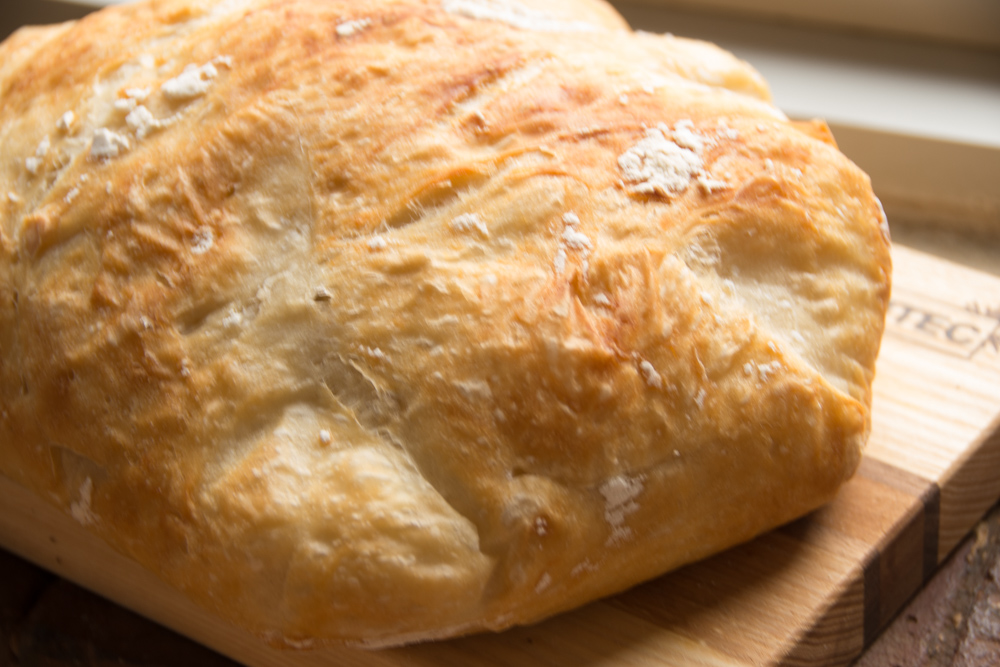
  • I’ve been a home bread baker for most of my adult life and, especially now as more home bakers are interested in breads, I’ve been experimenting with different loaves. This one – a No Knead Bread developed by Sullivan Street Bakery‘s Jim Lahey is the bake I return to most frequently. It uses a list of simple ingredients and, with a little forward planning, the rise time is not a roadblock.

    Usually when I’m putting together this dough, I start in the late afternoon the day before I intend to bake. Doing so allows most of the rising of 18 hours (I do think the longer rise time makes a difference) to happen while I’m asleep. I do the reshaping, preheating, and baking the next morning.

    This recipe was originally shared in the New York Times by Mark Bittman. After it was originally published, NYT Food readers shared some suggestions for homebakers which are part of this recipe published in the Times. I’ve incorporated my own adjustment to baking based on what I learned from America’s Test Kitchen (those tweaks are in bold italics below).

    Over the last few years, I have come to realize how important weighing ingredients like flour is to successful baking. While consistent bakes are often at the whim of the weather (how humid, how warm the air temperature), I strongly recommend using a food scale for weighing ingredients which makes the time investment in turning out a quality loaf more of a certainty.

    Jim Lahey’s No Knead Bread

    Ingredients
    • 3 ⅓ cups/430 grams all-purpose or bread flour, plus more for dusting
    • ¼ teaspoon instant yeast
    • 2 teaspoons kosher salt
    •  Cornmeal or wheat bran, as needed

    Method

    1. In a large bowl combine flour, yeast and salt. Add 1 1/2 cups plus 2 tablespoons/390 milliliters water, and stir until blended; dough will be shaggy and sticky. Cover bowl with plastic wrap. Let dough rest at least 12 hours, preferably about 18, at warm room temperature, about 70 degrees.
    2. Dough is ready when its surface is dotted with bubbles. Lightly flour a work surface and place dough on it; sprinkle it with a little more flour and fold it over on itself once or twice. Cover loosely with plastic wrap and let rest about 15 minutes.
    3. Using just enough flour to keep dough from sticking to work surface or to your fingers, gently and quickly shape dough into a ball.
    4. Generously coat a cotton towel (not terry cloth) with flour, wheat bran or cornmeal; put dough seam side down on towel and dust with more flour, bran or cornmeal. Cover with another cotton towel and let rise for about 2 hours. When it is ready, dough will be more than double in size and will not readily spring back when poked with a finger. Here’s where I use some baking tips learned from America’s Test Kitchen’s version of a No-Knead Bread: tear off a piece of parchment big enough to hold the ball of dough (about 12×14 or so). Put the parchment into a 10-12 inch fry pan and allow the dough to rest on top of the parchment (covered loosely with a piece of plastic). If you like your bread dusted with flour or toasted sesame seeds, this is the time to do that.
    5. At least a half-hour before dough is ready, heat oven to 450 degrees. Put a 6- to 8-quart heavy covered pot (cast iron, enamel, Pyrex or ceramic) in oven as it heats. When dough is ready, carefully remove pot from oven. Slide your hand under towel and turn dough over into pot, seam side up; it may look like a mess, but that is O.K. Shake pan once or twice if dough is unevenly distributed; it will straighten out as it bakes. And here’s another modification if you are using parchment: TURN THE TEMPERATURE DOWN TO 425 degrees when you are ready to put the dough into the dutch oven (or whatever you are using). Paper could ignite if you don’t turn the temperature down.
    6. Cover with lid and bake 30 minutes, then remove lid and bake another 15 to 30 minutes, until loaf is beautifully browned. Cool on a rack.
  • One of my fondest childhood food memories is of the big rectangular tin of cutout cookies my Aunt Eleanor used to make for the four of us each Christmas and Easter. She had collected an impressive array of cutout shapes which, when I had to downsize, went to another family member. I love her recipe – which includes a box of lemon or orange gelatin as one of the cups of sugar.

    I wanted to keep this memory going with our granddaughter who has an egg allergy, so my Aunt’s recipe needed to be replaced. Fortunately, many cooks and bakers are replacing or eliminating eggs these days, so the choices were plentiful; however, this was the recipe that I used for this year’s holiday bake and it is delightful – the website, Safely Delish, has quite a nice collection of allergy-friendly recipes.

    There is nothing more fun than decorating cookies with a toddler! When I say sugar goes everywhere, believe me – sugar in shoes, on fingers and in every possible nook and cranny. Any cleanup is definitely worth the fun and laughs. Looking forward to our next session and more cookie decorating!

    Egg Free Cut Out Cookies from Safely Delish

    Ingredients

    • 1/2 cup granulated sugar
    • 1/2 cup butter, softened slightly
    • 2 TBSP milk
    • 1/2 tsp vanilla
    • 1-1/2 cups all purpose flour
    • 1 tsp baking powder
    • 1/4 tsp salt

    Method

    1. Preheat oven to 350 degrees F.
    2. Cream together butter, sugar, milk and vanilla in a large bowl.
    3. In a separate bowl, whisk together flour, baking powder and salt.
    4. Add dry ingredients to wet ingredients and stir until combined. Cover and chill dough in refrigerator for about 30 minutes (I put the dough aside overnight – you can do this, but you may need to allow the dough to come up in temperature a bit in order to roll it out).
    5. On parchment paper (used a silicon mat) roll dough out to 1/4-1/3 inch thickness. If the dough warms up too much during the process, refrigerate rolled dough an additional 10-20 minutes before cutting shapes).
    6. Cut out shapes with cookie cutters. Press one side in sugar or sprinkles if desired (I did not do this as we wanted to save for decorating day) Re-roll any remaining dough for additional cutouts.
    7. Bake at 350 degrees F for 10-12 minutes depending on cookie shape, size, and thickness. Allow to cool on the pan for at least 5 minutes before transferring to wire cooking rack. Cool completely before frosting.

  • Each holiday season, I choose a biscotti recipe – or two – to make for my family as a way to honor my Sicilian heritage. This year’s bake comes from New York’s Union Square Cafe and melds chocolate, espresso and white chocolate (the original calls for milk chocolate). The condo filled with the aroma of dark chocolate and espresso which, for me, was transformative. I honestly don’t think there are any two flavors the complement each other more than chocolate and coffee.

    I made a few tweaks to the baking instruction: I like to use white chocolate with a cookie that is already off the charts in chocolate flavor. I also use the baking shortcut of standing up each cookie for the second bake. To me, it saves having to flip cookies from one side to the other and gives a really even bake. I also would recommend creating four dough logs on the first bake – the yield will be closer to the 60 in the original recipe and the dough does seem to spread out quite a bit. However, to honor Union Square’s recipe, I’ve included their original recipe and method below.

    No matter how you bake them, they are delicious.

    Union Square’s Chocolate Biscotti Recipe courtesy of NYT Cooking

    Ingredients

    • 2 cups all-purpose flour
    • ¾ cup plus 2 tablespoons cocoa powder
    • 1 teaspoon salt
    • 1 teaspoon baking soda
    • 1 ¾ cups lightly packed dark brown sugar
    • ⅓ cup granulated sugar
    • 2 ounces (4 tablespoons) butter, at room temperature
    • 1 tablespoon vanilla extract
    • 1 teaspoon double-strength brewed espresso (I used espresso powder)
    • 3 large eggs
    • 7 ½ ounces (1 rounded cup) small milk chocolate chips (I used white chocolate)
    • 1 large egg, beaten and mixed with 1 tablespoon water, for egg wash (don’t skip this!)
    • 2 tablespoons raw sugar

    Method

    1. Preheat oven to 350 degrees. Line a 12- by 17-inch baking sheet with parchment paper or nonstick liner. Sift together the flour, cocoa, salt and baking soda; set aside.
    2. Using a heavy-duty electric mixer, cream together the brown sugar, granulated sugar and butter for 3 to 5 minutes at medium speed. Add vanilla extract and espresso. Mix for 10 seconds. Add eggs one at a time, mixing for 10 seconds at medium-low speed after each addition. Add sifted flour mixture and mix at low speed until dough comes together, 1 to 2 minutes. Add chocolate chips and mix just until chips are evenly incorporated, 15 to 20 seconds.
    3. Transfer dough to a work surface and divide in two, shaping into balls. Form each ball into a log 1 1/2 to 2 inches wide. Transfer logs to prepared baking sheet and flatten slightly. Brush tops of logs with egg wash and sprinkle each log with 1 tablespoon raw sugar. (Here’s where I took some advice on the recipe website: CHILL THE DOUGH – wrap in wax paper or cling wrap and allow it to chill to make handling easier.)
    4. Bake until biscotti have spread, have a few cracks and bounce back slightly when pressed with fingertips, 30 to 40 minutes. Remove from oven and let cool completely, about 1 1/2 hours.
    5. Preheat oven to 325 degrees. Using a sharp serrated knife, cut logs into 1/4-inch to 1/2-inch slices. Place each slice with a cut side down on a baking sheet lined with parchment paper or nonstick liner. Bake until firm, crisp and slightly dry, about 15 minutes. Store in an airtight container at room temperature for up to three days, or freeze for up to three months.