• It’s July and we’re in the middle of zucchini season! This recipe from The Kitchn possibly will give purists a moment of pause, but for me, I was a great way to take advantage of summer vegetable overloads while the kitchen was not overheating from roastings or stove-top cooking.

    Easy Slow-Cooker Ratatouille

    By Christine Gallary, The Kitchn

    Ingredients

    • 4 tablespoons olive oil, divided, plus more for drizzling
    • 2 medium yellow onions, diced
    • 1 pound eggplant
    • 1 pound zucchini or summer squash
    • 2 large red, green, or yellow bell peppers (about 1 pound)
    • 1 pound tomatoes
    • 4 cloves  garlic 
    • 2 tablespoons tomato paste
    • 1/2 teaspoon fine salt, plus more for seasoning
    • 1/4 cup coarsely chopped fresh basil leaves

    Method

    1. Heat 2 tablespoons of the oil in a large frying pan over medium heat until shimmering. Add the onions, season with salt, and cook, stirring occasionally and adjusting the heat as needed, until completely softened and light golden-brown, about 30 minutes. Meanwhile, prepare the rest of the vegetables.
    2. Trim the eggplant and zucchini, cut into 1-inch cubes, and place in the insert of a 6-quart or larger slow cooker. Trim, core, and cut the bell peppers into 1-inch dice and add to the slow cooker. Core the tomatoes, cut into 1 1/2-inch dice, and add to the slow cooker. Finely chop the garlic and add to the slow cooker.
    3. When the onions are ready, add the tomato paste to the pan and stir to coat the onions. Transfer the onion mixture to the slow cooker. Add the remaining 2 tablespoons oil and 1/2 teaspoon salt. Stir to coat all the vegetables.
    4. Cover the slow cooker and cook until the vegetables are extremely tender, 4 hours on high or 5 to 6 hours on low. If you’d like to cook off some of the excess liquid in the slow cooker, cook uncovered for the last 30 minutes.
    5. Stir in the basil and taste for seasoning, adding more salt as needed. Drizzle with more olive oil before serving if desired.

    For Noomers: This recipe serves 8-10. Calories 98, Fat 5.9 g, Carbs 11.4 g, Fiber 3.3 g, Sugar 5.1 g, Protein 2.2 g, Sodium 31.3 mg
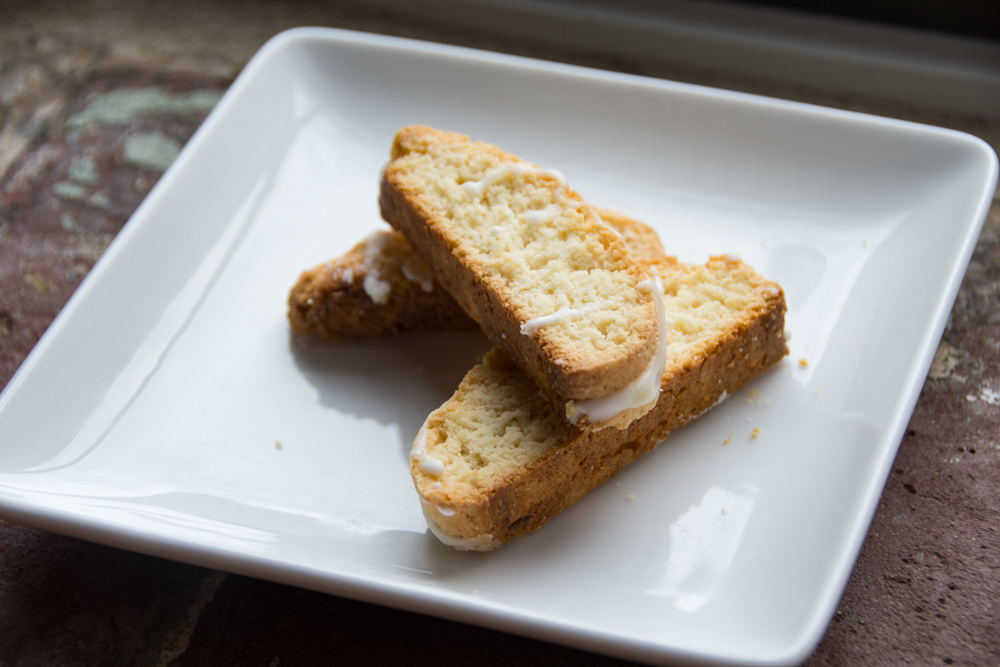
  • For a family cookout, I was asked to bring dessert, which if I’m being honest, is my favorite food course. Not wanting to have to bring plates, bowls or utensils, I decided a plateful of cookies sounded just about right. And along with a chocolate-based cookie and a nut-based one, I felt like a more citrusy-based cookie might make a good contrast.

    Biscotti are one of the most enjoyable bakes I do. They honor my Italian heritage and once a base cookie has been mastered, the flavor combinations are endless. This is a terrific recipe from King Arthur Baking, even though purists would scoff that does not involve flipping the cookies from one side to the other mid-way through a second bake. I have always used the technique of putting the cookies upright on a second bake; for me the biscotti turn out with a consistently and evenly baked crispiness.

    For this bake, I left out the almonds to accommodate some with allergies or sensitivities.

    Lemon-Almond Biscotti from King Arthur Baking

    Ingredients

    For the Biscotti

    • 6 tablespoons butter, softened
    • 2/3 cup (135g) granulated sugar
    • 1/4 teaspoon salt
    • grated rind of 1 medium lemon (about 1 tablespoon)-I used about twice that
    • 3/4 to 1 1/4 teaspoons almond extract, to taste (From KA: *3/4 teaspoon will give you the merest hint of almond; if you’re fond of that flavor, use the greater amount of extract)
    • 1 1/2 teaspoons baking powder
    • 2 to 3 tablespoons freshly squeezed lemon juice, to taste
    • 2 large eggs
    • 2 cups (241g) Unbleached All-Purpose Flour

    For the Glaze

    • 1/2 cup (57g) confectioners’ or glazing sugar
    • 1 1/2 teaspoons lemon juice powder (The powder is a KA product, but I prefer using lemon juice)
    • 2 to 3 teaspoons milk (If using lemon juice, additional milk may not be needed)

    Method

    1. Preheat the oven to 350°F. Lightly grease (or line with parchment) one large (about 18″ x 13″) baking sheet.
    2. In a medium-sized bowl, beat the butter, sugar, salt, lemon rind, almond extract, and baking powder until the mixture is smooth and creamy. Beat in the lemon juice and eggs; the batter may look slightly curdled.
    3. At low speed of your mixer, add the flour, stirring until smooth; the dough will be sticky.
    4. Scrape the dough onto the prepared baking sheet. Shape it into a log that’s about 13″ long x 3″ wide x 3/4″ thick. Straighten the log, and smooth its top and sides; a wet spatula or wet bowl scraper works well here.
    5. Bake the dough for 25 minutes. Remove it from the oven, and allow it to cool on the pan anywhere from 10 to 25 minutes. Reduce the oven heat to 325°F.
    6. (This is a step I don’t use) Using a spray bottle filled with room-temperature water, lightly but thoroughly spritz the log, making sure to cover the sides as well as the top. Softening the crust just this little bit will make slicing the biscotti much easier. (If you do spritz, you may want to follow the KA suggestion of waiting another 5 minutes before slicing)
    7. Use a serrated knife to cut the log crosswise into 1/2″ slices.
    8. Set the biscotti on edge on the prepared baking sheet. Return the biscotti to the oven, and bake them for 30 to 35 minutes, until they feel very dry and are beginning to turn golden around the edges. Remove the biscotti from the oven, and transfer them to a rack to cool.
    9. To make glazed biscotti: Combine the confectioners’ or glazing sugar with the lemon juice powder and milk; drizzle over cooled biscotti.
    10. Store completely cool biscotti at room temperature, well wrapped, for a couple of weeks. Freeze for longer storage.

  • Flour Bakery + Cafe Homemade Oreos – egg-free version

    My favorite stop for a quick(er) bite in Boston is Joanne Chang’s Flour Bakery + Cafe. I think I’ve been to all of them at one time or another! And a natural follow-on for those times when I can’t get into the City (looking at YOU COVID), has been to bake from one of Joanne Chang’s fabulous cookbooks.

    This weekend I decided to make some cookies for a family get-together, and, as our granddaughter has an egg allergy, I wanted to make something she could eat as well. With just one egg in the recipe, the Flour Bakery Oreos seemed like it could withstand an egg substitution without totally compromising quality.

    For the most part I think it did. This egg-free version is made with Bob’s Egg Replacer in place of the single egg called for in the original recipe. Just a warning that this may have made the cookie even more fragile, so lots of care needed in assembly. And maybe a little more practice on my part in getting that perfectly round shape of the Flour Bakery + Cafe version.

    Ingredients

    For the cookie

    • 1 cup (2 sticks) unsalted butter, melted & cooled slightly
    • 3/4 cup (150 grams) granulated sugar
    • 1 tsp vanilla extract
    • 1 cup semisweet chocolate chips, melted & cooled slightly
    • 1 egg (substituted 1 TBSP Bob’s Egg Replacer + 2 TBSP water per package; “flax eggs” also a possibility)
    • 1 1/2 cups (210 grams) unbleached AP flour
    • 3/4 cup (90 grams) Dutch-processed cocoa powder
    • 1 tsp kosher salt
    • 1/2 tsp baking soda

    For the Vanilla Cream Filling

    • 1/2 cup (1 stick) unsalted butter, softened
    • 1 2/3 cups (230 grams) confectioners’ sugar
    • 1 tsp vanilla extract
    • 1 TBSP milk
    • Pinch of kosher salt

    Method

    1. In medium bowl, whisk together the butter and granulated sugar until well combined. Whisk in the vanilla and chocolate. Add the egg or egg substitute and whisk until thoroughly incorporated.
    2. In another medium bowl, stir together the flour, cocoa powder, salt & baking soda until well mixed. Stir the flour into the chocolate mixture. (JBC’s note is that this mix will seem like it is too flour-y & one may need to mix with hands. It’s OK-getting messy is fun!) Let the dough sit for 1 hour at room temperature.
    3. Transfer the dough to a 15-inch square of parchment. Use your hands, shape the dough into a rough log about 10 inches long and 2 1/2 inches in diameter. Place the log at the edge of the parchment and roll the parchment around the log. Now roll the log to be smoother, keeping the 2 1/2 inch diameter.
    4. Refrigerate for AT LEAST 2 hours or until firm – check every 15 minutes or so in case the log may need to be re-shaped/re-rolled. (See JBC notes on freezing/thawing dough at this point)
    5. Preheat the oven to 325 degrees Fahrenheit and butter a baking sheet or line with parchment – I needed 3 cookie pans.
    6. Slice the dough into 1/4 inch thick rounds and place on the cookie sheet about an inch apart.
    7. Bake for 20-25 minutes or until the cookies are firm to the touch (JBC notes that you should start checking on the cookies at 16 minutes – I found I only needed 18 minutes per bake to get the cookies to this point). Cool in the pan – be aware that the cookies are quite fragile at this point.
    8. Make the filling: Using a stand mixer fitted with a paddle, beat the butter on low speed for 30 seconds or until completely soft and creamy. Add the confectioners’ sugar and vanilla – beat until perfectly smooth. Add the milk and salt and again beat until smooth (JBC notes this may look like putty.)
    9. Scoop about 1 rounded tablespoon of the filling onto the bottom of one cookie (At this point, I switched to a pastry bag because it felt like there was a little more control over filling distribution). Top with a second cookie, bottom-side down. The press the cookies (GENTLY!!!) together to spread the filling toward the edges. Continue until all of the cookies have been filled.
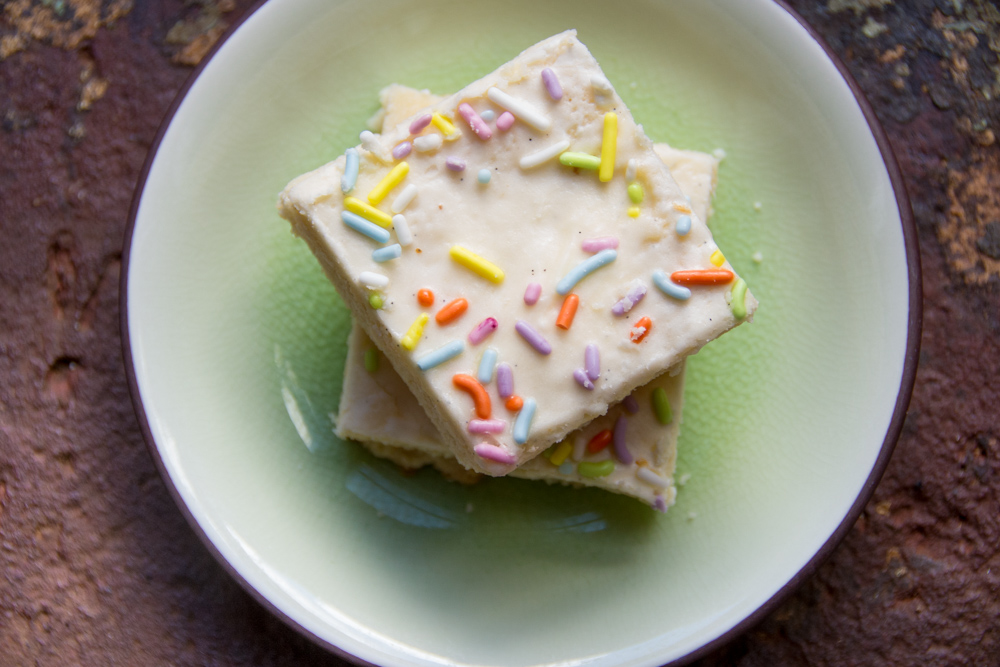
  • Always on the lookout for an easy cookie recipe, I recently came across this one in the New York Times Food section. Adapted by Margaux Laskey, it originated with American Girl, presumably that’s a reference to American Girl dolls, which as a boy-mom but an elementary teacher, I have only a passing acquaintance with.

    We now have a granddaughter who is not quite into dolls, but, should that change, we’ll have a cookie at the ready.

    Sugar Cookie Bars

    adapted from American Girl Cookies by Margaux Laskey

    Ingredients

    FOR THE BARS:

    • 1 cup/225 grams unsalted butter (2 sticks), at room temperature, plus more for greasing the pan
    • 2 ¾ cups/350 grams all-purpose flour
    • ½ teaspoon fine sea salt
    • 1 (8-ounce/225-gram) package cream cheese, at room temperature
    • 1 ½ cups/300 grams granulated sugar
    • 1 large egg
    • 2 teaspoons vanilla extract

    FOR THE FROSTING:

    • 6 tablespoons/85 grams unsalted butter (3/4 stick), at room temperature
    • 2 cups/245 grams confectioners’ sugar
    • 1 tablespoon milk or heavy cream, plus more as needed
    • 1 teaspoon fresh lemon juice, plus more as needed
    • 1 teaspoon vanilla extract, plus more as needed
    • ¼ teaspoon fine sea salt
    •  A drop or two of gel food coloring (optional)
    •  Assorted sprinkles, for decorating (optional)

    Method

    1. Heat oven to 350 degrees. Lightly butter a 9-by-13-inch baking pan. Line the pan with parchment paper, running it up the two long sides of the pan and letting it extend past the rim by about 2 inches.
    2. Make the bars: In a medium bowl, whisk together the flour and salt. In a large bowl with an electric mixer, or in the bowl of a stand mixer fitted with the paddle attachment, beat butter and cream cheese on medium speed until well blended, about 1 minute. Add the granulated sugar and beat until smooth, about 1 minute. Add the egg and vanilla and beat on low speed until well combined, about 1 minute. Turn off the mixer and scrape down the bowl with a rubber spatula. Gradually add the flour mixture, mixing on low speed just until blended, about 1 minute.
    3. Using a spatula, scrape the dough into the prepared baking pan and spread it into an even layer. Bake just until the edges are starting to turn light golden brown, and a toothpick inserted in the middle has moist crumbs, 20 to 25 minutes. (Do not overbake!) Remove the pan from the oven and set it on a wire rack. Let cool completely. When fully cooled, remove the bars from the pan using the overhanging parchment paper.
    4. Make the frosting: Place the butter in the bowl of a stand mixer fitted with the paddle attachment. Beat the butter on medium speed until creamy, about 1 minute. Add 1 cup confectioners’ sugar, beating on low speed until fully combined, then repeat with remaining 1 cup confectioners’ sugar. Add the 1 tablespoon milk or heavy cream, 1 teaspoon lemon juice, the vanilla, salt and food coloring, if using, and beat on medium speed until the frosting is light and fluffy, scraping down the sides halfway through, about 4 minutes. Add more milk if needed to thin out the mixture. Add lemon juice and vanilla to taste.
    5. Using a spatula, spread the frosting on top, then decorate with sprinkles, if using. Cut into 20 bars and serve.
  • Photo by Amy Bisson

    When we were a young family, my mother-in-law gifted me with an galvanized hand-crank bread bucket. She had one that she used each week to turn out loaves of bread and, once I became more interested in bread-baking, she found one and gifted it to me.

    Back in those days (the late 1970s, early 1980s), we also belonged to a local food coop where I could purchase both whole grain and white flours in bulk. In fact I had a couple of small garbage can style containers in our pantry filled with one flour or the other on a regular basis. Given the bulk buys, we needed to use up our pantry stores, so bread baking became a regular weekend event.

    One of my favorite recipes for bread comes from Edward Espe Brown’s Tassajara Bread Book. While the directions in the book are exquisitely detailed (helpful for novice bread bakers), the best thing I discovered about the tasty loaves produced by this recipe was that it allowed for variations. Using different flours, adding seeds, changing up sweeteners, forming different shapes – if you could imagine it, you could do it with this basic dough.

    In the process of one of our moves, I unfortunately lost my original 1970 edition of the Tassajara Bread Book, and so my less-regular bread baking turned to other recipes, techniques and guides. But recently I was delighted to find the original recipe on the NY Times Cooking website and that inspired me to replace my long-lost copy of Tassajara Bread with a newer (2009) edition.

    One of the tastiest and most reliable breads I’ve ever baked, this recipe brings back a ton of fond memories of mixing up a week’s worth of bread by hand in my “machine” back when things seemed simpler. I’ve discovered that a little nostalgia doesn’t hurt the bread dough either.

    Tassajara Yeasted Bread Recipe

    Ingredients

    • 1 ½ tablespoons dry yeast (2 packages)
    • 3 cups lukewarm water (85 to 105 degrees)
    • ¼ cup honey, molasses or brown sugar
    • 1 cup dry milk
    • 7 to 8 cups whole-wheat flour
    • 4 teaspoons salt
    •  cup oil or butter
    • 1 egg beaten with 2 tablespoons of water, for egg wash

    Method

    1. In a large bowl, dissolve the yeast in water and stir in the honey and dry milk. Stir in 4 cups of the flour to form a thick batter and beat 100 strokes with a spoon. Let the dough rise for 45 minutes,.
    2. Now add the salt and oil and an additional 3 cups of the flour and knead until the dough comes away from the sides of the bowl.
    3. Knead on a floured board, using about 1 cup more flour if needed to keep the dough from sticking, for about 10 minutes, until the dough is smooth. Let it rise for 50 to 60 minutes, until it is doubled in size. Punch down and let it rise again for 40 to 50 minutes, until doubled in size.
    4. Shape into two round loaves and place them on a baking sheet. (I’ve also used loaf pans, shaped rolls, see the Edward Espe Brown book for more)
    5. Let rise for 20 to 25 minutes. Coat the top of each loaf with egg wash. Bake in a 350-degree oven for 1 hour or until golden brown
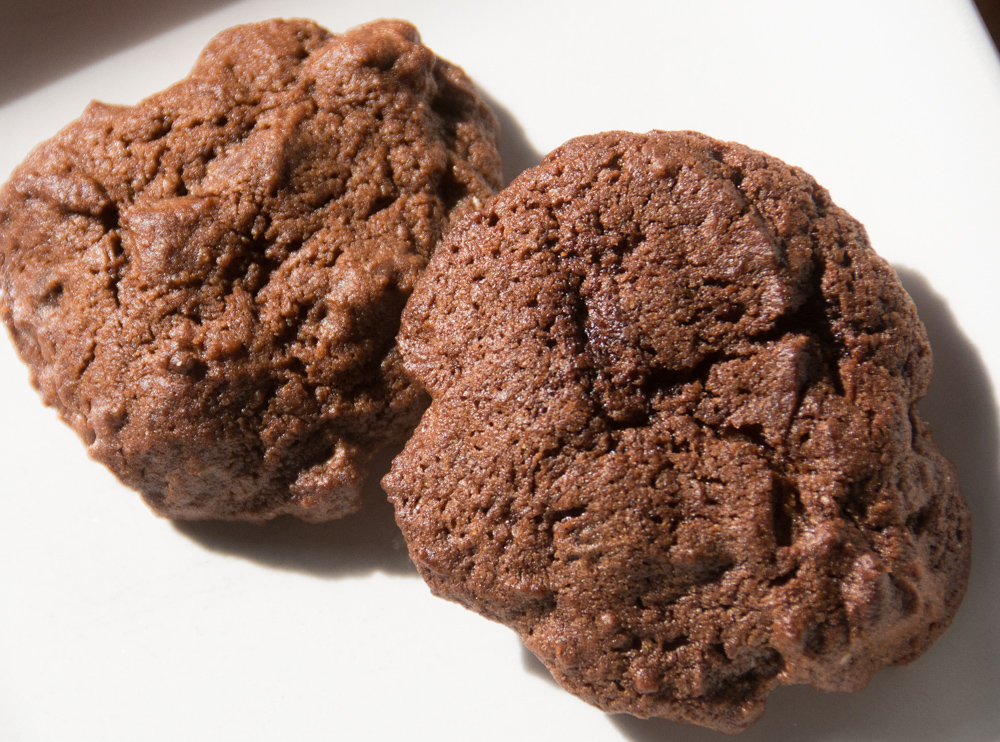
  • I’ve enjoyed baking for as long as I can remember, and throughout our COVID isolation, I made bread several times a week. With just two of us here, it’s hard to justify regularly baking desserts. However, watching the British Bake-off for the umpteenth time got me thinking: all those practice bakes at home had to go somewhere. And that’s when the idea for baking and sharing what I create started to come into focus. Now I just need to find homes for baked goods. Hopefully that won’t be a problem without a solution!

    I’ve restarted regularly baking some new and some old favorites this week, and in addition to being more purposeful about shooting and blogging about “regular” dishes, I’ll be posting some baking that I’ve discovered. This cookie recipe was this week’s offering for dessert and it comes from King Arthur Baking. Easy to put together and delicious – and it can be modified according to the baker’s whim by adding or omitting chocolate bits, nuts, or what-have-you.

    Chocolate Drop Cookies from King Arthur Baking

    Ingredients

    • 8 tablespoons (113g) butter, room temperature
    • 1/2 cup (99g) granulated sugar
    • 1/3 cup (71g) brown sugar, packed
    • 1/3 cup (28g) Dutch-process cocoa
    • 1/2 teaspoon salt
    • 1/4 teaspoon baking soda
    • 1/2 teaspoon baking powder
    • 1 teaspoon vanilla extract
    • 1 large egg
    • 2 tablespoons (28g) milk (optional, if you add chips/nuts/fruit be sure to use this!)
    • 1 cup + 2 tablespoons (135g) All Purpose Flour
    • 1 teaspoon espresso powder, (optional; for depth of flavor this makes a good add-in)
    • 2 cups (227g to 340g) chips, nuts, and/or dried fruit, optional but good

    Method

    1. Preheat the oven to 375°F. Lightly grease two baking sheets, or line with parchment.
    2. Beat together the butter, sugars, cocoa powder, salt, baking soda, baking powder, and vanilla until well blended.
    3. Add the egg, beating until smooth. Scrape the sides of the bowl, and beat again until smooth. If you’re going to add chips, nuts, or dried fruit, beat in the 2 tablespoons milk; if you’re going to bake plain cookies without add-ins, omit the milk.
    4. Add the flour and espresso powder, mixing to combine.
    5. Stir in the chips, nuts, etc., if you’re using them.
    6. Drop the cookies by the traditional “tablespoonful” (actually about 4 measuring teaspoons) onto the prepared baking sheets, spacing them about 2″ apart. A tablespoon cookie scoop works well here.
    7. Bake the cookies for 12 to 14 minutes, until they’ve lost their shiny appearance and look like they’re set. Remove them from the oven, and cool right on the pans; or transfer to a rack to cool.

    (Noomers, this is about 120 calories per cookie; other nutrition info on the recipe website)

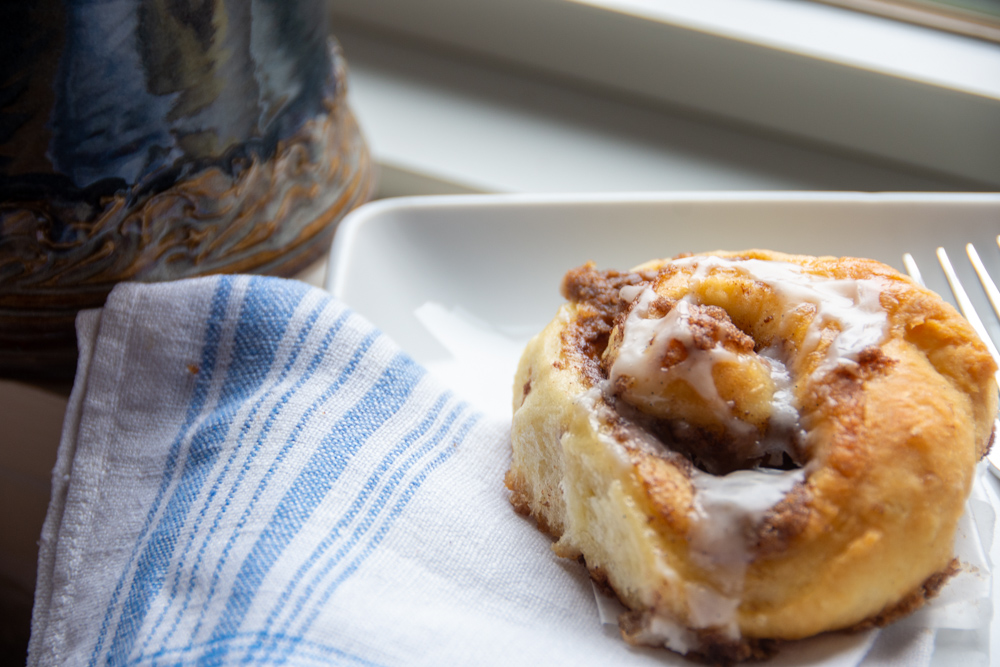
  • Our granddaughter has an egg allergy which has prompted a lot of researching into egg-free baking and cooking. My experience with egg substitutions in “regular” recipes has not proven to be very successful. Oftentimes the bake is dry and heavy. So when I spotted this recipe, Light Cinnamon Rolls – Eggless from Munaty Cooking and saw the rave reviews it was, well exciting! My own memories of my Great-Grandmother Wyant’s baking (Apple Kuchen) were of light and buttery dough laced with cinnamon. Even though egg-free baking can be a technical challenge, I wanted to try to replicate some of those tastes from my memories.

    These absolutely live up to the hype of producing a “astonishing, light, soft, fluffy and heavenly cinnamon rolls.” Bonus points for the lowered calories – 187 – which make this Noomer happy to have an occasional treat. Treat yourself – exploring Muna Kenny’s blog and website for more creative and delightful recipe ideas. Also be sure to read the original post, linked in the title below, for some helpful information about ingredients, substitutions, and freezing instructions (as if there were any of these left!).

    Munaty Cooking’s Light Cinnamon Rolls – Eggless

    Ingredients

    FOR THE DOUGH

    • 3/4 cup warm milk mixed with 1 1/2 tablespoon lemon juice (set aside for 5 minutes)
    • 1/4 cup vegetable oil (I’ve used coconut oil and avocado oil with success)
    • 1 tablespoon melted unsalted butter
    • 2 teaspoon dry active yeast
    • 1/4 cup sugar
    • 2 1/4 cup all-purpose flour
    • 1/4 teaspoon baking powder
    • 1/4 teaspoon baking soda
    • 1/2 teaspoon salt

    FOR THE FILLING

    • 1/2 cup unpacked brown sugar
    • 1 tablespoon cinnamon powder
    • 3 tablespoon softened butter

    FOR THE GLAZE

    • 1/2 cup powdered sugar
    • 1/4 teaspoon vanilla extract
    • 1 tablespoon milk

    Method

    TO MAKE THE DOUGH

    • In a small bowl, mix the milk with sugar and yeast. Cover and set aside for 10 minutes.
    • Sift flour, baking soda, baking powder, and salt. Keep aside.
    • Add the butter and oil to the flour and mix using a paddle attachment if using a stand mixer, or beat it using a stand mixer, or use your hand instead. (I did mix by hand as my mixer was in need of repair)
    • Add the milk mixture to the flour gradually and knead until you get a smooth dough, will take 7 – 10 minutes of kneading with hands.
    • Cover the dough and keep in warm place to rise, for 1 or 1 and half hour.

    MAKING THE FILLING

    • Mix all ingredients together and keep aside in cool place.

    MAKING THE GLAZE

    • Mix all ingredients together and keep aside in cool place.

    MAKING THE CINNAMON ROLLS

    • Roll dough into a rectangle 24″ by 18″ or 18″x18″ to make bigger rolls. (I did 18×18)
    • Spread the filling by sprinkling it over the rolled-out dough, it’s faster. Or use a spatula and spread it evenly. With heat, and while baking, the filling will spread within the rolls!
    • Roll it up from the longest side, roll tight but not too tight. Pinch the seam tightly.
    • Cut the roll into 16 slices and place on a baking sheet. For bigger rolls cut 9. Use a 9×9 inch baking pan. Place parchment paper at the pan’s bottom. Place the rolls in the baking pan, keeping a small gap between each roll.
    • Cover the rolls and let them rise for 40 minutes.
    • Preheat oven to 180C/360F. Bake 15 to 18 minutes or until it’s golden.

  • We keep frozen seafood on hand these days. Frozen seafoods in my opinion, are not always a great substitute for fresh, but when our food shopping choices went down to whatever we could find curbside (meaning I was no longer standing in front of the fish counter asking when something had been brought in), I gave myself permission to rely on frozen. I do not indulge in seafood swimming in butter sauces – or worse – but it has been a convenience to find filets and flash-frozen seafood for cooking.

    This recipe is a great way to include healthier seafood dishes in our meal rotations and it made enough for a lunch later in the week. While we wait for warmer weather, why not bring a little of the Caribbean to our table?

    Ellie Kreiger, who has made a life’s work out of developing healthy and tasty nutritious meals contributed this recipe to the Washington Post (see original link here).

    Ellie Kreiger’s Caribbean-Style Seafood Stew

    Ingredients

    • 2 tablespoons neutral oil (I chose avocado oil)
    • 1 medium yellow onion (about 8 ounces), diced
    • 1 medium yellow or orange bell pepper (about 8 ounces), diced
    • 1 celery stalk, sliced
    • 1/2 Scotch bonnet or habanero pepper, seeded and thinly sliced (judge accordingly, but don’t skip this)
    • 2 cloves garlic, minced or finely grated
    • 1 1/2 teaspoons chopped thyme
    • 1/2 teaspoon kosher salt, plus more to taste
    • 1/4 teaspoon freshly ground black pepper
    • 1 cup canned no-salt-added diced tomatoes with juices, or 1 cup fresh diced tomatoes with juices
    • 1 cup seafood stock or water
    • 1 tablespoon fresh lime juice, plus more to taste
    • 1 1/2 pounds skin-on or skinless red snapper, or skinless mahi mahi or other white fish fillet, cut into 1 1/2-inch pieces
    • 8 ounces large shrimp (about 12 shrimp), peeled and deveined
    • 1/4 cup fresh cilantro leaves
    • Cooked rice, for serving (optional)

    Method

    1. In a large Dutch oven or a large, deep skillet over medium heat, heat the oil until shimmering. Add the onion, bell pepper, celery, Scotch bonnet or habanero and cook, stirring occasionally, until the vegetables have softened somewhat but have not browned, 4 to 5 minutes.
    2. Stir in the garlic, thyme, salt and pepper and cook for 30 seconds more.
    3. Add the tomatoes, seafood stock or water and the lime juice, and bring to a boil. Reduce the heat to medium-low, cover, and simmer until the sauce thickens a bit and the flavors are melded, about 10 minutes.
    4. Gently stir in the fish and shrimp, raise the heat to medium, cover and cook, stirring gently occasionally, until the seafood is just cooked through, 5 to 7 minutes.
    5. Taste, and season with additional salt and lime juice, if desired. Divide the stew among bowls, garnish with cilantro, and serve with rice, if desired.

    For Noomers: Calories 354; Fat: 10g; Sodium: 597mg; Carbohydrates: 19g; Sugar: 8g; Protein: 45g

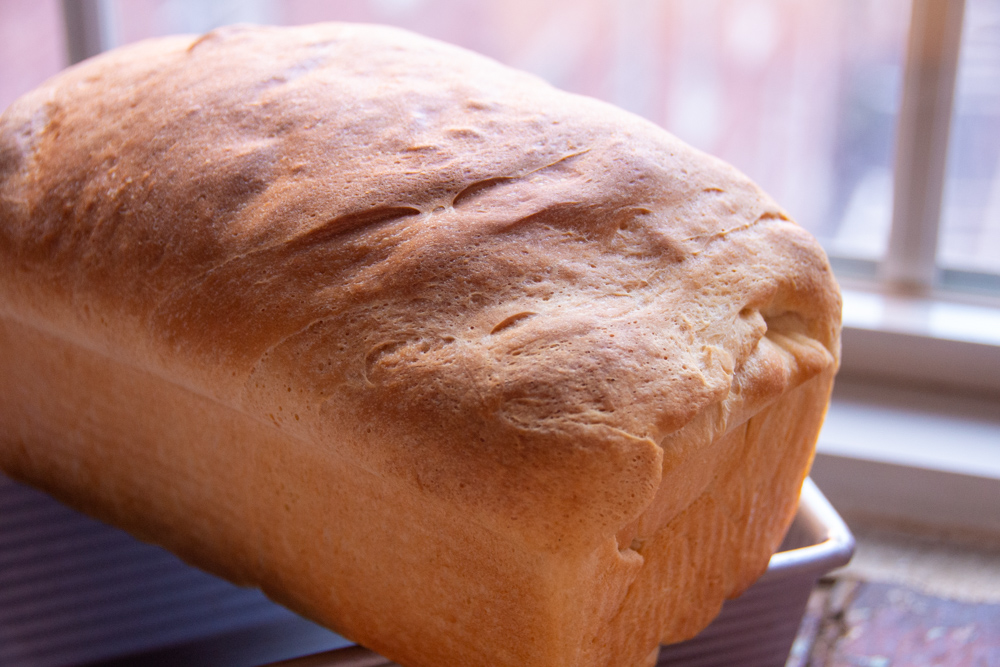
  • I’ve been on the hunt for a less rustic loaf of bread recently and, of course, I’m finding lots of options on King Arthur Baking’s recipe site. This one looks like a winner for sandwich breads and is going into the bread-baking rotation.

    We rarely have an abundance of milk in our fridge any more; most of what I buy is already designated for breakfast cereal so bread recipes calling for milk – lukewarm or otherwise – tend to be a supply chain challenge. However, as luck would have it, I keep a container of Baker’s Special Dry Milk on hand. Note that this dry milk product does not reconstitute like powdered milk some of us are familiar with from long ago. Baker’s Special Dry Milk is added to other dry ingredients (1/4 cup for every 3 cups of flour – or in this recipe’s case, 1 cup of milk that is called for). The liquid (1 cup) is replaced by lukewarm water. I added the butter, sugar and yeast to the water and all worked out well.

    Hopefully this Fall, we’ll be able to make the trek to King Arthur’s Norwich, Vermont headquarters to make a comparison taste test.

    King Arthur Baking “Our Favorite Sandwich Bread”

    Ingredients

    • 1 cup (227g) milk (see introduction for adapting to using Baker’s Milk)
    • 2 tablespoons (28g) butter
    • 2 teaspoons instant yeast or active dry yeast
    • 2 tablespoons (25g) sugar
    • 1 1/4 teaspoons (8g) salt
    • 3 cups (361g) King Arthur Unbleached All-Purpose Flour

    Method

    1. Heat the milk to a simmer, and pour it over the butter in a large mixing bowl. Let the mixture cool to lukewarm, then add the yeast and sugar. (see introduction for how I adapted using Baker’s Special Milk as a replacement for milk)
    2. Once the yeast softens, add the remaining ingredients and stir until the dough starts to leave the sides of the bowl.
    3. Transfer the dough to a lightly greased surface, oil your hands, and knead it for 6 to 8 minutes, or until it begins to become smooth and supple. (You may also knead this dough in an electric mixer or food processor, or in a bread machine set to the dough or manual cycle). Add a bit of additional milk or flour if needed — the dough should be soft, but not sticky.
    4. Transfer the dough to a lightly greased bowl, cover, and allow it to rise until puffy though not necessarily doubled in bulk, about 1 hour.
    5. Transfer the dough to a lightly oiled work surface, and shape it into an 8″ log. Place the log in a lightly greased 8 1/2″ x 4 1/2″ loaf pan, cover loosely with lightly greased plastic wrap, and allow the bread to rise for about 60 minutes, until it’s domed about 1″ above the edge of the pan. A finger pressed into the dough should leave a mark that rebounds slowly.
    6. Towards the end of the rising time, preheat the oven to 350°F.
    7. Bake the bread for 30 to 35 minutes, until it’s light golden brown. Test it by removing it from the pan and thumping it on the bottom (it should sound hollow), or by measuring its interior temperature with a digital thermometer (it should register 190°F at the center of the loaf).
    8. Remove the bread from the oven, and cool it on rack before slicing.
    9. Store the bread in a plastic bag at room temperature for several days; freeze for longer storage.
  • Food shopping, even now after a full year of the pandemic, continues to be a challenge for us. We’ve found that agile substitutions whenever planning a week’s cooking and eating is a skill that continues as spot shortages in food supplies continue. This skillet dinner was a good one for us. It employs shelf stable gnocchi, canned beans and canned tomatoes, and I could readily substitute the remaining kale I had in the fridge for the chard the recipe originally called for.

    I’ve recently discovered Eating Well magazine and have found the recipes on their website and in their periodical are delicious as well as healthy. This recipe, originally published in the January/February 2009 issue, is all that, AND vegetarian. As the cheese is optional, it easily translates to a plant-based winner.

    Skillet Gnocchi with Chard & White Beans

    Ingredients

    • 1 tablespoon plus 1 teaspoon extra-virgin olive oil, divided 
    • 1 16-ounce package shelf-stable gnocchi  
    • 1 medium yellow onion, thinly sliced 
    • 4 cloves garlic, minced 
    • ½ cup water 
    • 6 cups chopped chard leaves, (about 1 small bunch) or spinach (I substituted kale)
    • 1 15-ounce can diced tomatoes with Italian seasonings 
    • 1 15-ounce can white beans, rinsed 
    • ¼ teaspoon freshly ground pepper 
    • ½ cup shredded part-skim mozzarella cheese (left out to make more of a vegan meal)
    • ¼ cup finely shredded Parmesan cheese (left out to make more of a vegan meal)

    Method

    1. Heat 1 tablespoon oil in a large nonstick skillet over medium heat. Add gnocchi and cook, stirring often, until plumped and starting to brown, 5 to 7 minutes. Transfer to a bowl.
    2. Add the remaining 1 teaspoon oil and onion to the pan and cook, stirring, over medium heat, for 2 minutes. Stir in garlic and water. Cover and cook until the onion is soft, 4 to 6 minutes.
    3. Add chard (or spinach) (or kale) and cook, stirring, until starting to wilt, 1 to 2 minutes.
    4. Stir in tomatoes, beans and pepper and bring to a simmer.
    5. Stir in the gnocchi and sprinkle with mozzarella and Parmesan (I left this out). Cover and cook until the cheese is melted and the sauce is bubbling, about 3 minutes.

    For fellow Noomers:

    Serving Size: 1 Cup (which is approximately 1/6 of recipe) Per Serving: 326 calories; protein 13.7g; carbohydrates 56.1g; sugars 4.9g; fat 6.6g; sodium 610.3mg.