If Thursday’s meal has made you feel the need for something a little more light or healthy, this post is for you.
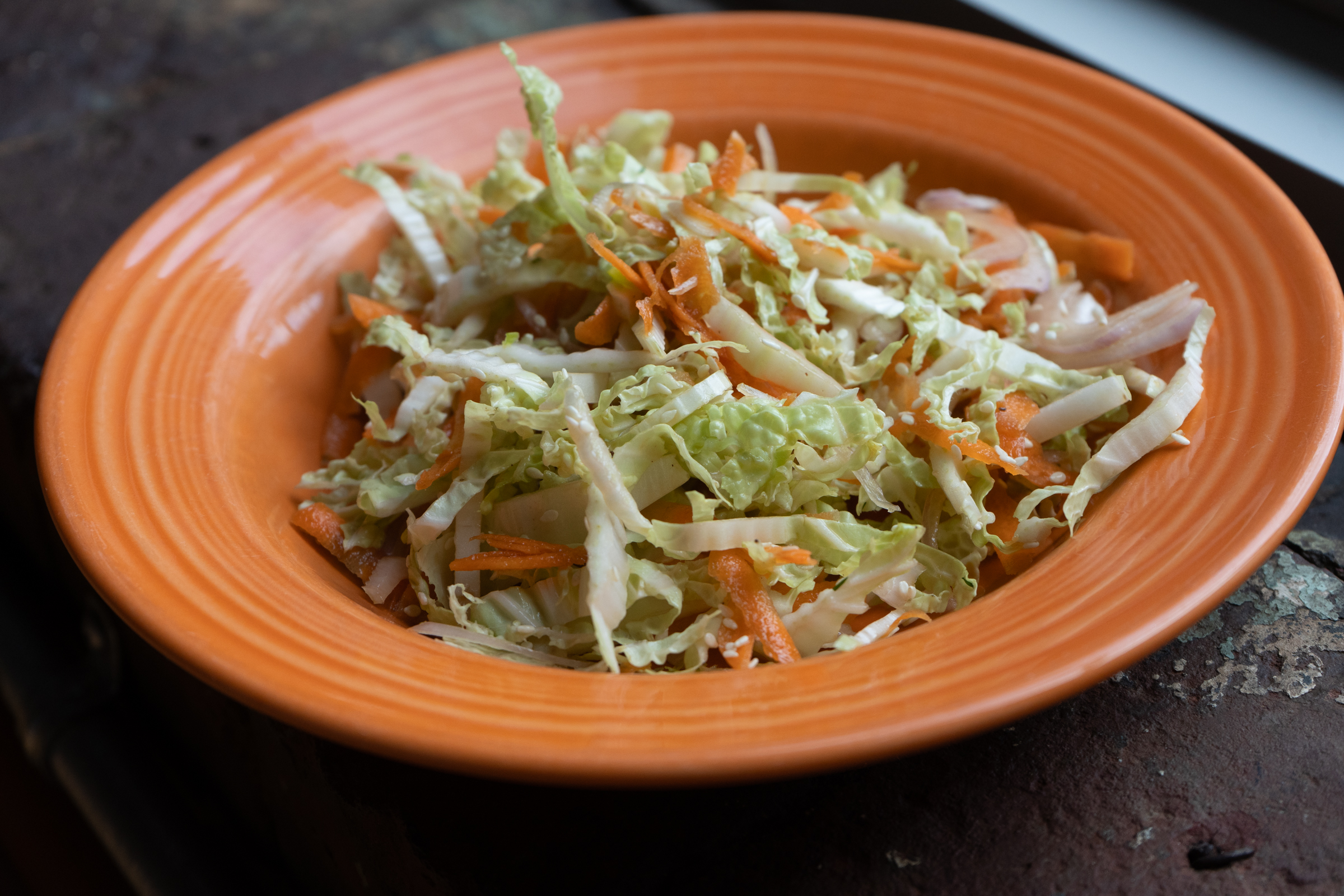
Our Clark Farm Winter CSA Share this week included some crisp and beautiful Napa cabbage. We also received some carrots and with that, a slaw was born.
Flavored by a sauce made with sesame seeds, ginger and a touch of soy, this side does not contain mayo and is a much lighter complement to a main dish.
The recipe can be found of America’s Test Kitchen’s website, (subscription) but I’ve included the ingredient list so you’ll have all on hand.
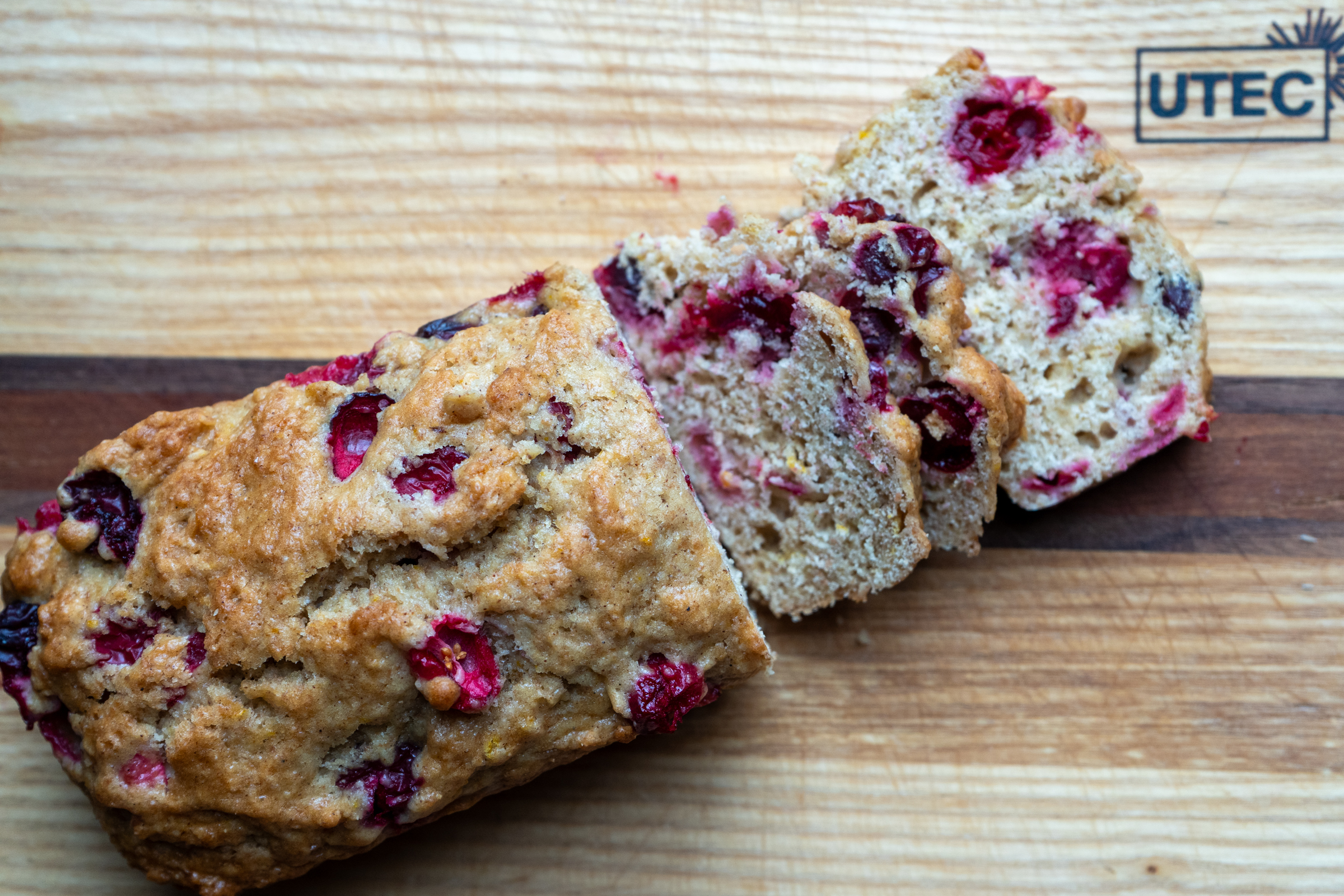
Cranberries. They are arguably the quintessential flavor of Thanksgiving. For all the debate over homemade or jellied cranberry sauces, the way I like my cranberries is in bread, and this one has been a family favorite for years.
Anna Thomas, author of Vegetarian Epicure Books I and II, was the force behind the recipe I end up baking at least once every year. Originally published in 1972, the books are still available. If you are vegetarian or vegetarian curious, these books should be part of your library.
The recipe for Cranberry Orange Bread is from Vegetarian Epicure II – page 46 to be exact. It’s a not-too-sweet, moist quick bread that is delicious not only on Thanksgiving Day, but any day of the year.
One of my favorite vegetables is Romanesco – kind of a cross between broccoli and cauliflower. I love it for its creaminess and slightly stronger-than-cauliflower taste. Recently, our Clark Farm Carlisle Winter CSA share included a head of Romanesco and to say I was pretty excited about that would be an understatement.
Romasesco is tasty no matter how it is prepared, but adding it to a pasta dish with the saltiness of capers and Kalamata olives is sheer heaven. As we generally do, adding a healthy dose of red pepper flakes made for just the right level of heat.
This recipe comes from Laura Davidson on her website, A Beautiful Plate, where you can find the proportions and, if you need it, instructions on the best way to separate the florets from the stem of the Romanesco. Ingredients to have ready are below:
We’ve had an AeroGarden for a number of years now and occasionally I am able to successfully grow herbs.
This round I have some pretty bodacious looking basil, dill, and the beginnings of oregano and tarragon perking along.
Here’s a versatile dressing from Claudias Table that will keep you wondering. Is it a dressing? Or is it a dip? No matter how you use it, the tang of Greek yogurt makes for something delicious.
Ingredients listed below and the recipe/proportions are readily available on Claudias Table’s website.
This week is all about eating. And for some of us, it’s also about cooking. So for the next few days I’m planning to post every day. And to cook. Let’s see how that goes.
We’ve started our Winter CSA share with Clark Farm a few weeks ago, and even with cold weather, we are pretty darn impressed with our weekly haul. Week one brought us a beautiful bunch of chard along with garlic and some of Clark Farm’s Arugula Pesto. So, we had a pasta night which included all three.
One of the skills I started to develop as we’ve been part of this CSA is the ability to imagine how different ingredients will come together. So for this recipe, the actual skill was to cook the pasta to al dente and remember to reserve about a cup of the pasta water before draining (used to loosen the pasta at serving).
After a quick sauté of the garlic (olive oil and don’t cook the garlic too long or on too high a heat), I added the cleaned chard (leaves cut in half and then in ribbons, some of the stems cut in chunks) and about a cup of water to the skillet with the cooked garlic. Cover and let the chard steam away until limp.
When the pasta is al dente, reserve the cup of pasta water and drain the pasta. Return it to the pan and add in the chard and garlic. Gradually add pasta water a little at a time to loosen the pasta (you shouldn’t need the whole cup).
Top it with a healthy dollop of pesto and some grated Romano or Parmesan, whichever you prefer.
Dinner in about 15 minutes. What’s not to like about that?
Ingredients
About 1/2-3/4 lb of pasta (I used tubes, anything you fancy is fine)
Olive oil
2-3 cloves of chopped garlic
a good healthy head of chard
Pesto (premade or if you luck out like we did, get some freshly made)
This was a tasty and quick one-pot stew to pull together using some of our beautiful Fall Share from Clark Farm Carlisle. Cabbage, Tofu, and Delicata Squash Stew, or Báicài dòufu guō, comes from a terrific website for plant-based Asian inspiration – Woon Heng. Her recipe for Cabbage, Tofu, and Delicata Squash Stew is easily adaptable to what you may have on hand. With a cook time of 35 minutes from prep to finish, saying yes to trying something new is easy.
Just a word about our Farm Share: We’ve been more than amazed by the variety of produce in each week’s share. Clark Farm Carlisle has opened registration for 2026. If you are in the Massachusetts area and care about how the food you eat is grown, I recommend them highly. It’s been a privilege to participate – and we’re not done quite yet.
And if you aren’t close to Carlisle, MA, be sure to check out your local farmers, especially those who offer Community Supported Agriculture (CSA) shares through the year.. They deserve our support, and you deserve to know where your food is coming from.
We like to start our evenings with cinq à sept, aka the cocktail hour. It’s a way we transition from all that has been going on throughout the day into a more relaxed time for dinner and evening. Sometimes we even include adult beverages, but usually there’s a bit of and appetizer to get the evening started.
When we received beets in our Clark Farm Carlisle fall share, I almost immediately roasted them to use in salads. And then hunted down more tasty ways to use what has become one of my favorite vegetables. This recipe for Roasted Beet Hummus was originally published in December 2016 in Eating Well’s and revised and republished in September 2025 by Devon O’Brien, Senior Food Editor at Eating Well. It is a winner. Low in carbs, it is a delicious alternative to cheese and crackers. And if you have a food processor, it can be ready for the lead-in to pre-dinner festivities in 10 minutes.
Sunshine Kabocha Squash, like its more well-known sibling Kabucha or Japanese Winter Squash, has a slightly sweet flavor, creamy texture and doesn’t need to be peeled. In my view, that makes it a must-try.
This week, our Clark Farm Carlisle share included this variety of squash, which I roasted for a vegetable side. The instructions on how to roast are from Kristina Felix of the New York Times and I’ve gifted that article here.
Our Clark Farm Carlisle CSA Share included caraflex cabbage this past week so I had a second great opportunity to use cabbage in a way that is not usual for me. As a high-schooler, my part-time job was at a short-order stand where the owners were known for their delightful coleslaw – a secret recipe. Luckily, as I went off to college, one of them gifted me with the recipe and I can still make it today from memory.
But besides coleslaw and boiled corned-beef-and-cabbage, I wanted to find a good one-pot meal that wouldn’t be too heavy. We’d already made roasted caraflex cabbage – outstanding – but needed a new dish to try. This low-carb recipe from Cooking LSL ticked all the boxes AND, I was able to use quite a bit of our vegetable share.
This recipe and some other intriguing offerings are free on Cooking LSL’s website. I’m including the ingredients along with a few adjustments I made in order to get the most out of our Share.
Ingredients
olive oil
boneless, skinless thighs (I left mine whole)
carrot
cabbage (I used a caraflex)
salt, pepper, garlic powder (I prefer minced fresh), bay leaf
tomato sauce (I used some tomato compote I had on had which was made from CSA tomatoes)
One of my all-time favorite soups is carrot, and so with cooler weather and some beautiful, fresh carrots included in our Clark Farm CSA Share, I couldn’t resist.
Carrot soup, in my opinion, doesn’t require a step-by-step recipe. When I make it I use a blueprint of tastes that appeal to me. If I have a bit of fresh spinach, as I did tonight, I throw it in at the last minute so that it wilts.
As a home cook, I’ve become more skilled at imagining what tastes go together and which things I like. Fennel, spinach, mild or creamy beans leftover – all good. Here’s the basic process that I’ve been following:
Sauté chopped aromatics in your favorite oil; mine is coconut. I generally gravitate to chopped onion, a bit of fresh garlic, and chopped ginger root. Don’t like garlic or ginger? Don’t include it; I love the spiciness of ginger so I throw in at least a tablespoon.
Next throw in some (five – plus or minus depending on size) chunked up fresh carrots. If you like fennel, use that too. Just get them coated in the oil and aromatics.
Add at least a quart of liquids. I use up remnants of white or rosé wines, vegetable broth, water – whatever floats your boat.
Cook until the carrots (and whatever else) are soft. If you want to add something leafy, do that now.
Now blend it up. I use my immersion blender because a countertop blender is a pain to clean. If there are a few chunks in the soup, that is not a problem for me.
Plate it, garnish it (if you want – I like plain Greek yogurt the best), and enjoy.