This easy-to-assemble crustless quiche comes from NYTimes Cooking contributor and author Hetty Lui McKinnon, and I adapted it to fit what was in a recent CSA share – summer squash..
For me, my pie crust skill is not what it should be, so any opportunity to ditch the crust is an opportunity I’m onboard with trying.
This recipe, gifted here through my subscription to the New York Times, is a definite keeper for weeknights or weekends. Ingredient list below:
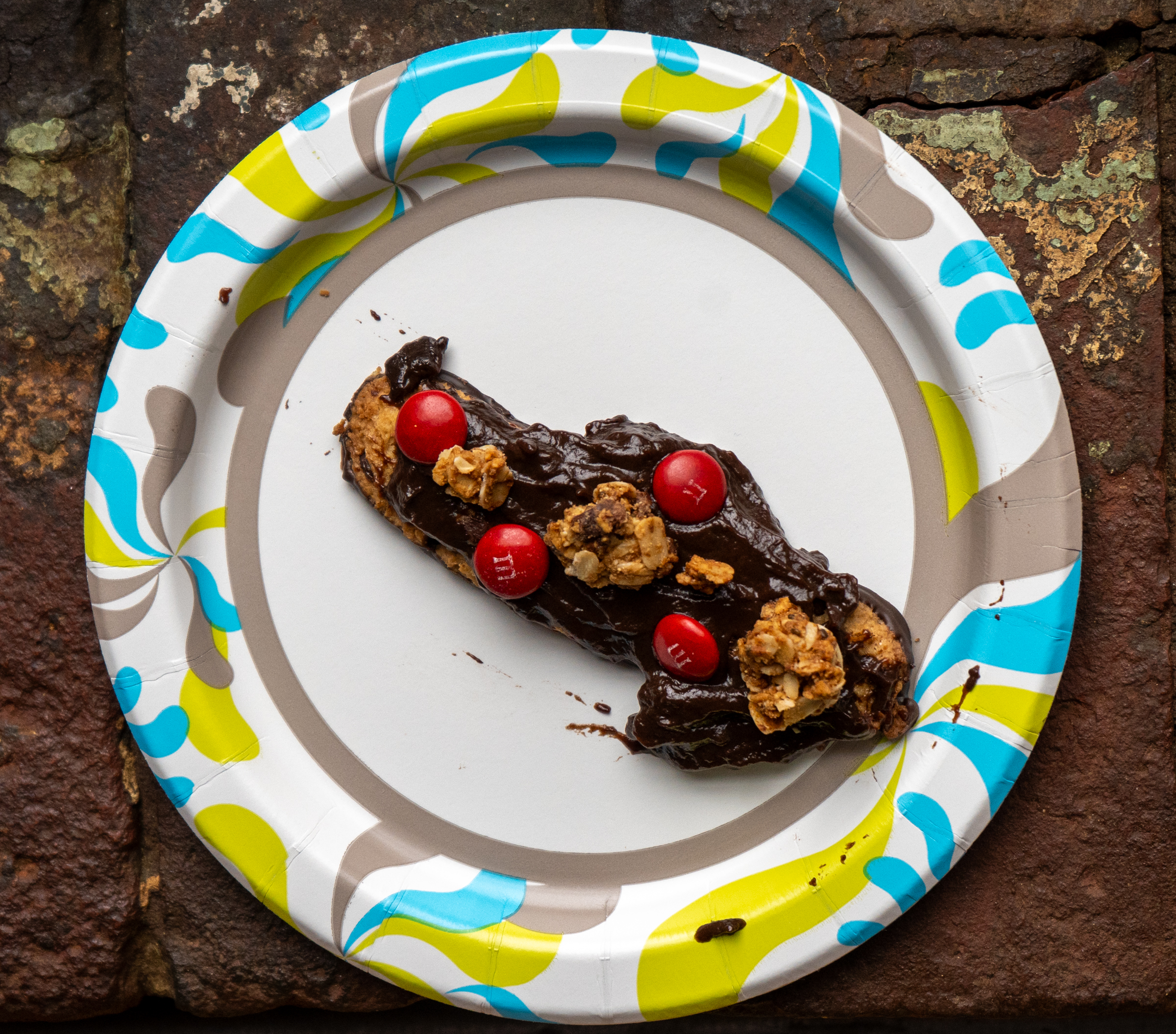
Our beautiful granddaughter, Zoe, is inventing recipes herself. This one is crunchy and filled with chocolate goodness. Zoe created this one herself in her home kitchen and made it for us while she was on a staycation. Yum!
Recipe for Desert Sticks
By Created and Dictated by Zoe
Ingredients
Chocolate pudding (we made our own at home)
Dunker Cookies (found at Trader Joe’s)
Purely Elizabeth Cookie Granola (found at Whole Foods Market)
M&M Candies
Optional: Add other candies and treats as you wish
Method
Put 1 Dunker Cookie on a plate.
Spread about 2 spoonfuls of chocolate pudding onto the Dunker
Place about 3 Purely Elizabeth clusters onto the Dunker
A year ago, Adrien and I traveled to Sicily to experience some of the culture of my ancestors. Sicily, as I discovered, is not just one culture but a melding of the influences brought by conquerors who settled on this island over its history.
One of the places we visited in 2025 was the commune and city of Trapani on the western Mediterranean coast. The influence of its history – conquered by Carthage, the Byzantine Empire, Arabs, Normans and even the Bourbons – is felt here. All of them dominated Trapani during certain periods, and each left some influences in the art, architecture and food. When we visited in 2025, students from across Sicily were convening to commemorate the end of mafia rule and I’ve recorded my impressions of that day here.
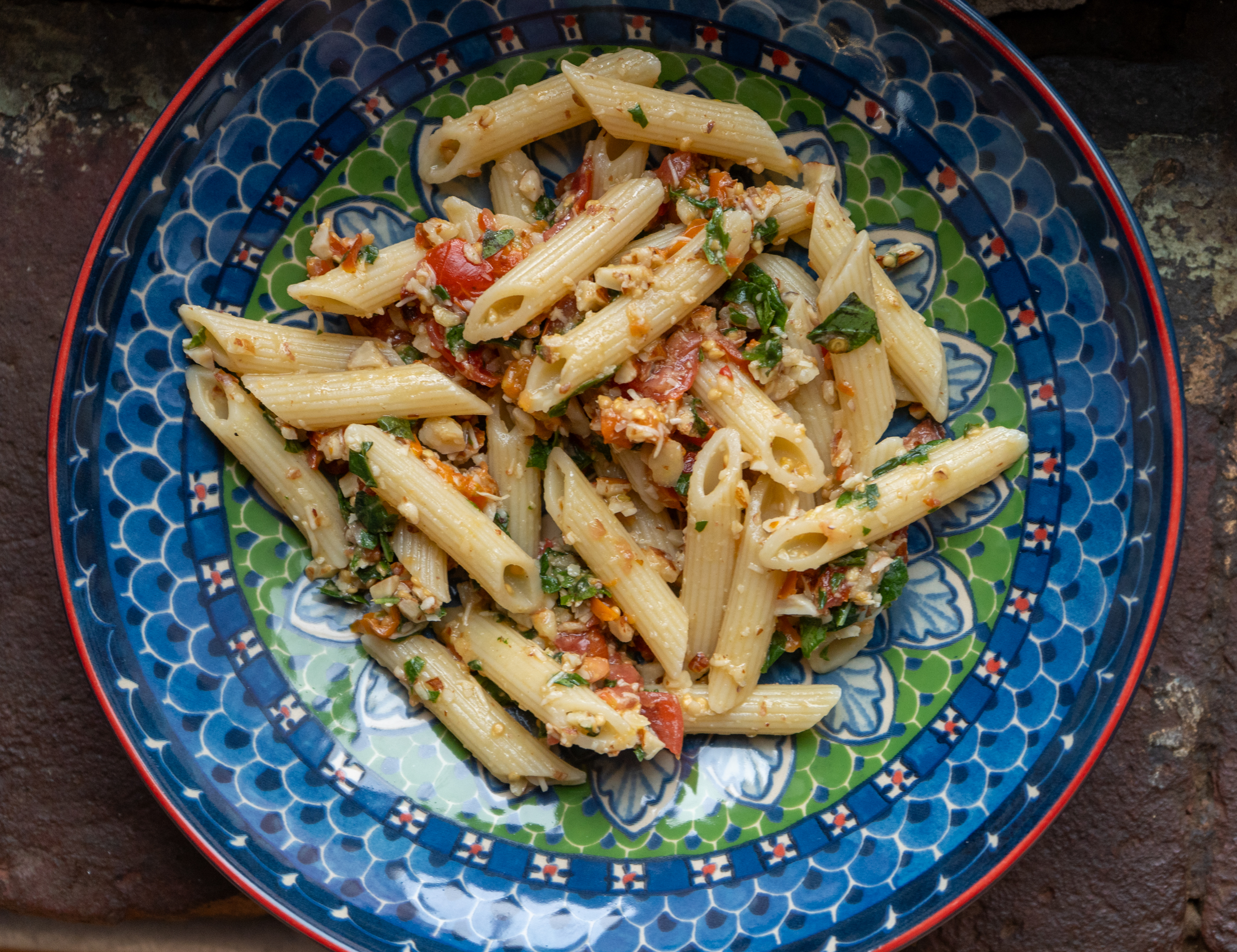
The real take-away for me was the large role ancient history has in the cuisine of Sicily. Sicily’s dishes are a reflection of the cultures that conquered it through time. Those influences are reflected in the cuisine present today, and Trapanese pesto is a prime example. In Trapani, the local pesto is not the pine nut-basil-garlic-olive oil pesto one finds in Linquria. This local version is made with almonds, tomatoes, a touch of garlic and a bit of basil. I’ve seen variations that use mint AND basil, and there is no absolute agreement upon which variety of tomato should be used. This is a definitively use-what-you-have recipe, and the resulting texture is dependent on what each cook chooses to use.
This recipe from Serious Eats makes a great blueprint for Sicilian style pesto. With an abundance of fresh cherry tomatoes and basil in our CSA share this week, this Trapanese Pesto was built on fresh, tomatoes picked at their peak. I really liked the version which used the ingredients found below and a more sturdy pasta like rigatoni but as our New England growing season starts to close out, there will be adjustments.
Toasted almonds (I used raw, skin-on almonds which I toasted at home)
Garlic
Red pepper flakes
Cherry tomatoes (about a lb. worked well)
Fresh basil leaves
Salt & Pepper
Extra Virgin Olive Oil
Pecorino Romano
This take on Pesto Trapanese from NYTimes Cooking uses mint and is also delicious (more chunky than smooth like mine). Recipe gifted through my subscription to the NYTimes.
This was and is a stellar drink for marking the end of summer. Coming from FirstOrderGin.com, the drink is refreshingly smooth. Somehow the addition of orange bitters and Cointreau smooths out any edges.
The link from the website is here and the ingredients are below, along with my notes on which bottles were preferred.
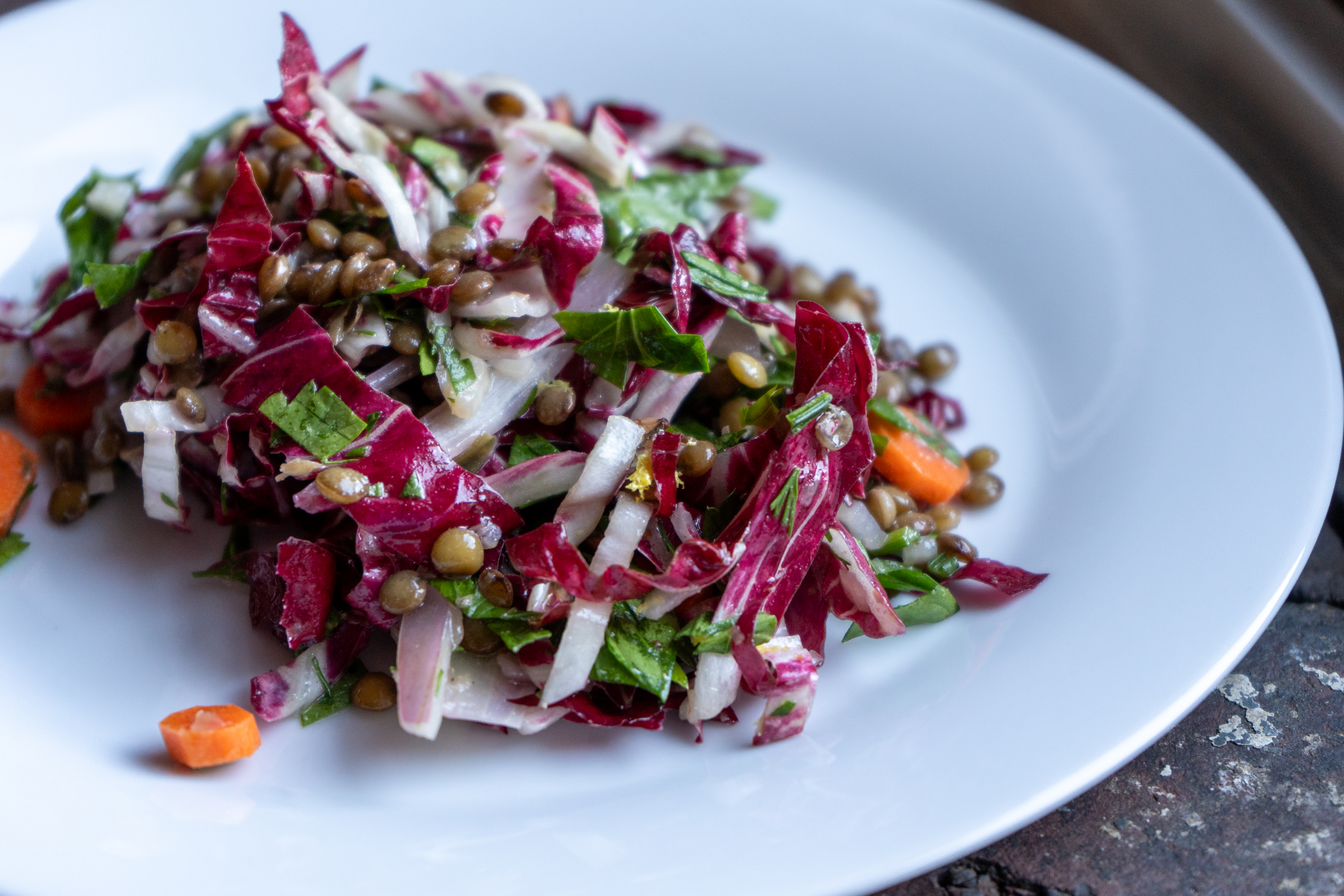
We often gravitate toward lentils and legumes in the Fall and Winter, but not very often in the summer. This recipe from NYT Cooking contributor and columnist Lisa Donovan, was proof of the error of my ways. The French, of course, have a way to turn any dish into a celebration of flavors and textures, and this dish is no exception. Contrast the earthiness of lentils with the crunch of carrots and radicchio and add in a classic French vinaigrette along with fresh herbs. This is a year-round dish that not only tastes delicious, it is a festival of color. French Lentil Salad would also make a great accompaniment to a protein like roasted chicken or fish, or, as we did last night, let it stand alone.
I am a huge fan of London Dry gins – the more juniper the better – and my go-to summer cocktail is nearly always a Negroni. In my search last week for an alternative to that, because once in a while it’s good to mix things up a bit (no pun intended), I discovered a great website for gin-based cocktails and this delightful end-of-summer concoction: First Order Gin.
This will keep me mixing it up with gins for a long while!
But for tonight, here’s the wonderful riff on a Negroni that I settled on. Cocchi Americano, one of the ingredients, is an aromatized wine from Italy. We keep a bottle in our fridge and have enjoyed it on ice as well as in different cocktails. Accept no substitutes. As to the cherry bitters, our go-to is Woodford’s (also great in a Manhattan) and the dry vermouth I used was Dolin Blanc.
In order to give credit where credit is due, I am including just the link to First Order Gin’s proportions and instructions here.
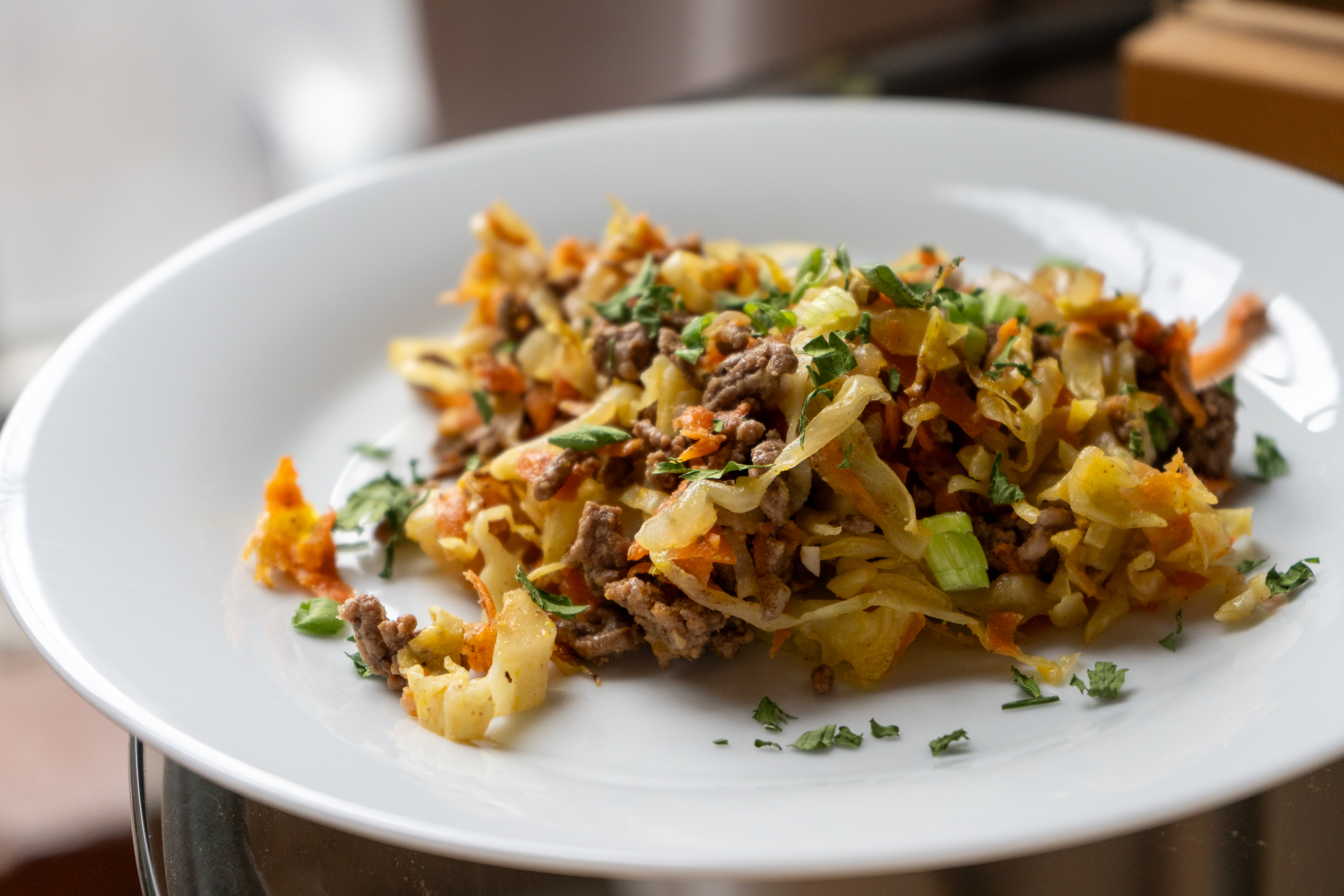
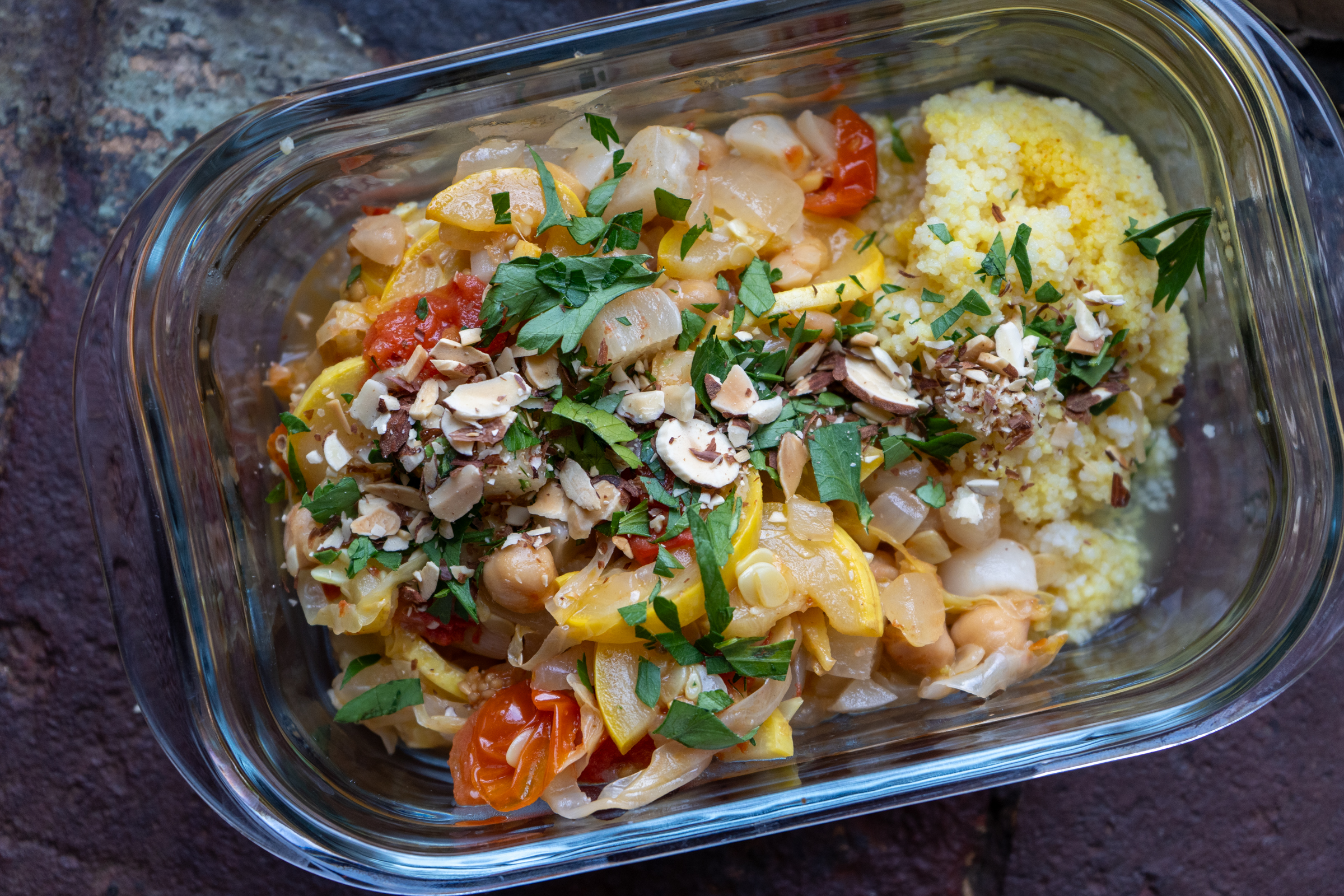
We are a household of two – so oftentimes even our small CSA share can be a challenge to finish. One recent week, we received some wonderful cabbage and for me, finding recipes that incorporated this fresh-from-the-farm organic vegetable in something more than a slaw became a personal mission.
With summer’s bounty, we have been enjoying a huge variety of veggies in our Clark Organic Farm CSA each week, and so, I was searching for a recipe to make use of our share this week and discovered this recipe adapted by Tara Parker-Pope in the New York Times. Because we are frequently vegan friendly – or at least vegetarian – this recipe was a delight. Don’t be intimidated by the long(ish) list of ingredients. A little advance veg prep, and it will all come together is about an hour.
The recipe is gifted here courtesy of my subscription to the New York Times. As always, I’ve included a list of ingredients.
We are having one of our summer heatwaves, so a chilled soup sounded like it was just the thing for dinner this weekend.
Our Clark Organic Farm CSA share has included beets several times over the summer season; however, this week we received golden beets, one of my favorites. Instead of roasting, which is my preferred method of cooking beets, this recipe called for the beets boiled, which certainly helped us out by not adding to an already hot kitchen. In fact, I cooked the beets the day before, peeled, and then chilled them. I pureed the soup several hours before serving, kept the garnish separate until serving and included slicecs of fresh baguette from our local artisan bakery.
The ingredient list is below, and I’ve included a gifted link to this recipe, developed by Maine chef Erin French of the Lost Kitchen and adapted by NYTimes Cooking food contributor and critique, Tejal Rao.
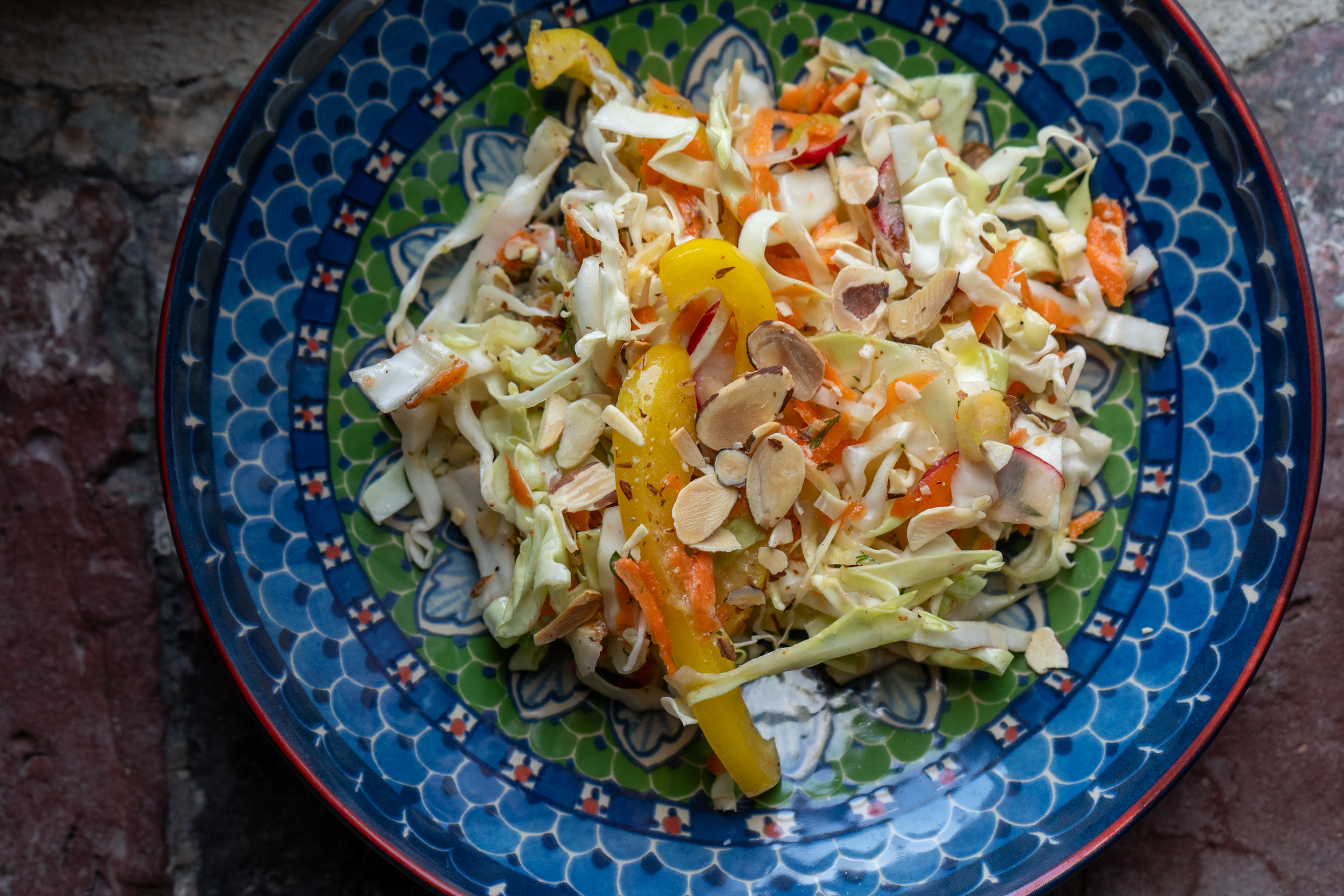
Our Clark Organic Farm CSA Share included some exceptionally fresh green cabbage recently. I love slaws and cabbage salads, but I don’t always like to use mayo as a binder/seasoning. So when this wonderful receipe from the Mediterranean Dish popped up, I was eager to put it together.
Without the mayo-based dressing, the salad makes a great accompaniment to fish or, actually just by itself.
Link to Mediterranean Dish‘s recipe here. The ingredient list is below (although, as recipe author Suzy Karadsheh says, the dish is infinitely adaptable).