We are still in THTC (too-hot-to-cook) mode here with at least another couple of days of extreme heat coming at us. So this delicious vegetarian recipe for Silken Tofu with Spicy Soy Dressing from cookbook author and NYTimes cooking contributor Hetty Lui McKinnon made perfect sense: no-cook, 5 minutes prep time, and bam! Dinner is served.
Be sure to go to Ms. McKinnon’s website and sign up for her newsletter for more great vegetarian recipes. You won’t regret it.
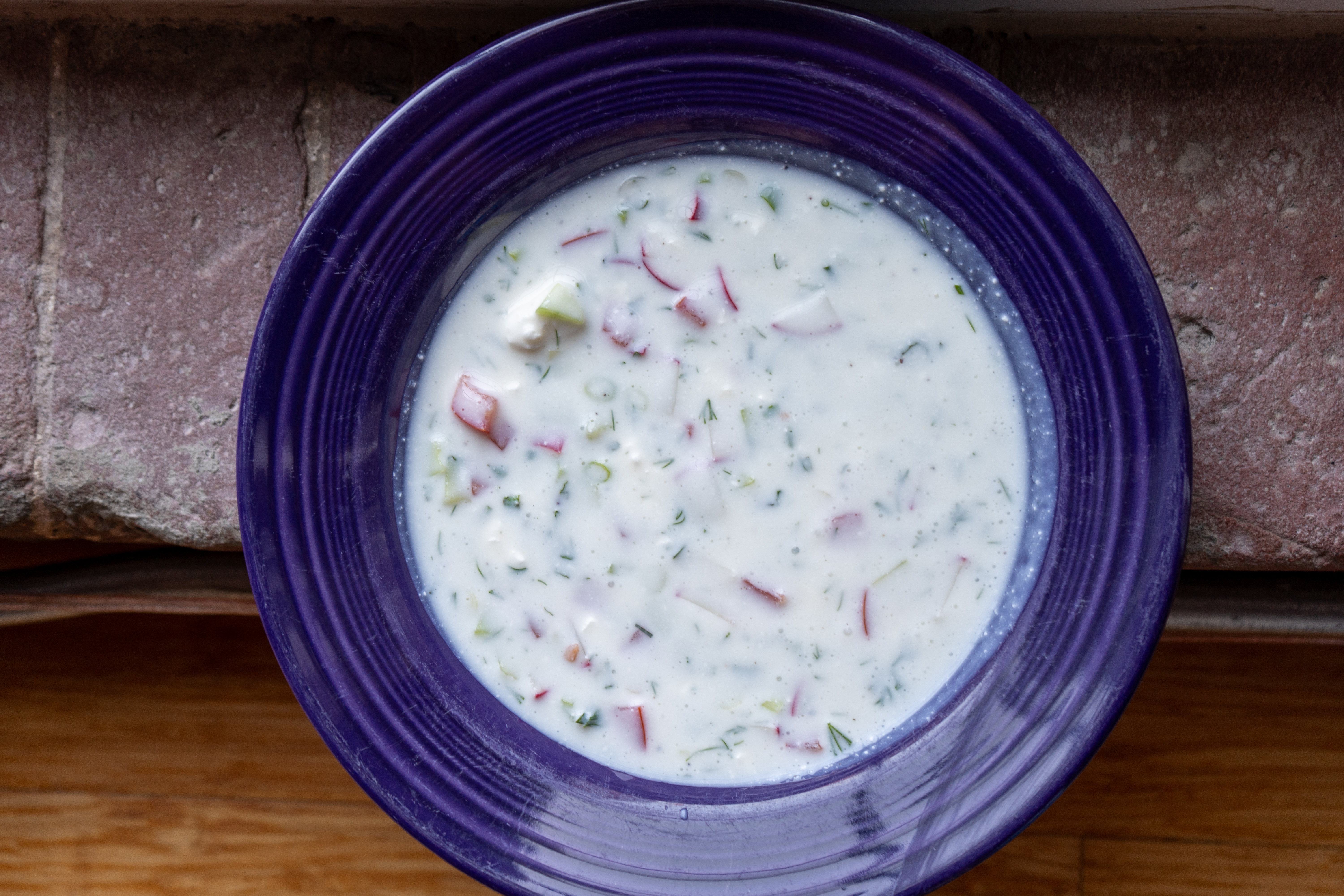
Along with most of the East Coast, our corner of New England is experiencing hot and humid days and nights. In other words, it’s THTC – too hot to cook. So when Washington Post and cookbook author Ellie Kreiger shared this recipe for a cold soup, I knew it was going to be the perfect antidote to heating up the kitchen.
The feta, herb choices (mint!) and yogurt definitely are reminiscent of a Greek salad. I chose to make this soup in the morning for our evening meal, which gave everything plenty of time of chill out and mingle.
We’re gearing up for the Fourth of July cookouts, and this salad from Jacques Pépin is exactly the kind of summer salad that can be transported without the worry that mayonnaise-based sides bring, and is flexible enough to be a make-ahead – something that gets better with time.
This Tabbouleh Salad recipe is found of JPF Foundations Member page and comes from Cook With Jacques Pépin and Friends. If you have not yet discovered this resource, do yourself a favor: go there and sign up. You’ll not only be upping your recipe and techniques, you’ll be supporting the Jacques Pépin Foundation which provides training and support for future chefs.
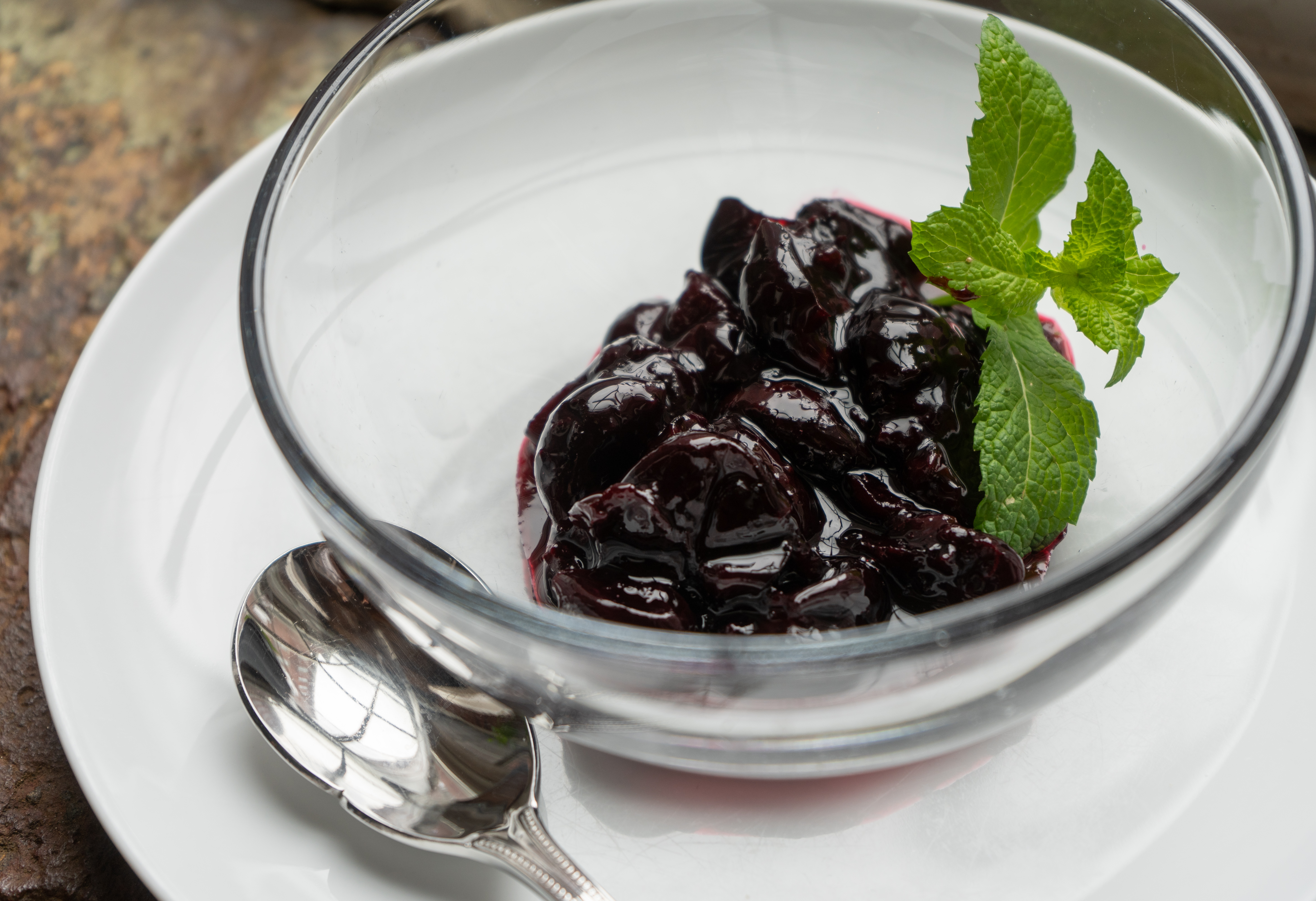
I don’t know why, but this June I was craving a cherry compote to serve alongside ice cream or yogurt or cake. As luck would have it, two of my favorite chefs – David Lebovitz and Jacques Pepin, posted their versions in newsletters and videos this past week. It’s as if they were reading my mind!
Chef Pepin’s version is simple, but called for cherry preserves, which I did not have on hand. David Lebovitz’s most recent iteration uses Pastis – which was definitely intriguing – but which we did not have in our liquor stash. So I went for this alternative recipe from David Lebovitz which is simple and did not add to my current collection of liqueurs.
What was not simple was that sometime when we downsized, I unfortunately got rid of my cherry pitter. Try as I might I could not master Jacque’s knife technique for pitting nor could I make the paperclip method work without totally opening up each fruit.
What I learned from reading and watching is that cooking compote is a fairly standard process. Also true: subtle variations in flavors can be achieved by subbing liqueurs.Do I see variations in my future? Yes I do!
Optional: 1 cup dried sour cherries (40 g) – I did not use these
2 tsp kirsch
1-2 drops pure almond extract
Method
David Lebovitz suggest you use a non-reactive pan that is much bigger than you anticipate. By doing so you’ll avoid boil-overs which, as you can imagine, are an unfortunate turn of events.
Stem and pit cherries. Put them in a large, non-reactive pot or sauce pan, and stir in the sugar.
Turn heat to medium, cover, and cook for 10 minutes, lifting the lid and stirring them frequently to encourage juice extraction and to make sure the liquid does not foam up or overflow the pot.
After 10 minutes of cooking, add the dry cherries if you wish. Cook for 5-10 minutes more or until the cherries are “wilted” and completely cooked through.
Remove from heat, stir in the kirsch (or whatever liqueur you’ve chosen) and almond extract. Cool before storing or service (which allows the juices to thicken).
Note: Refrigerate up to 5 days OR freeze (up to 1 year)
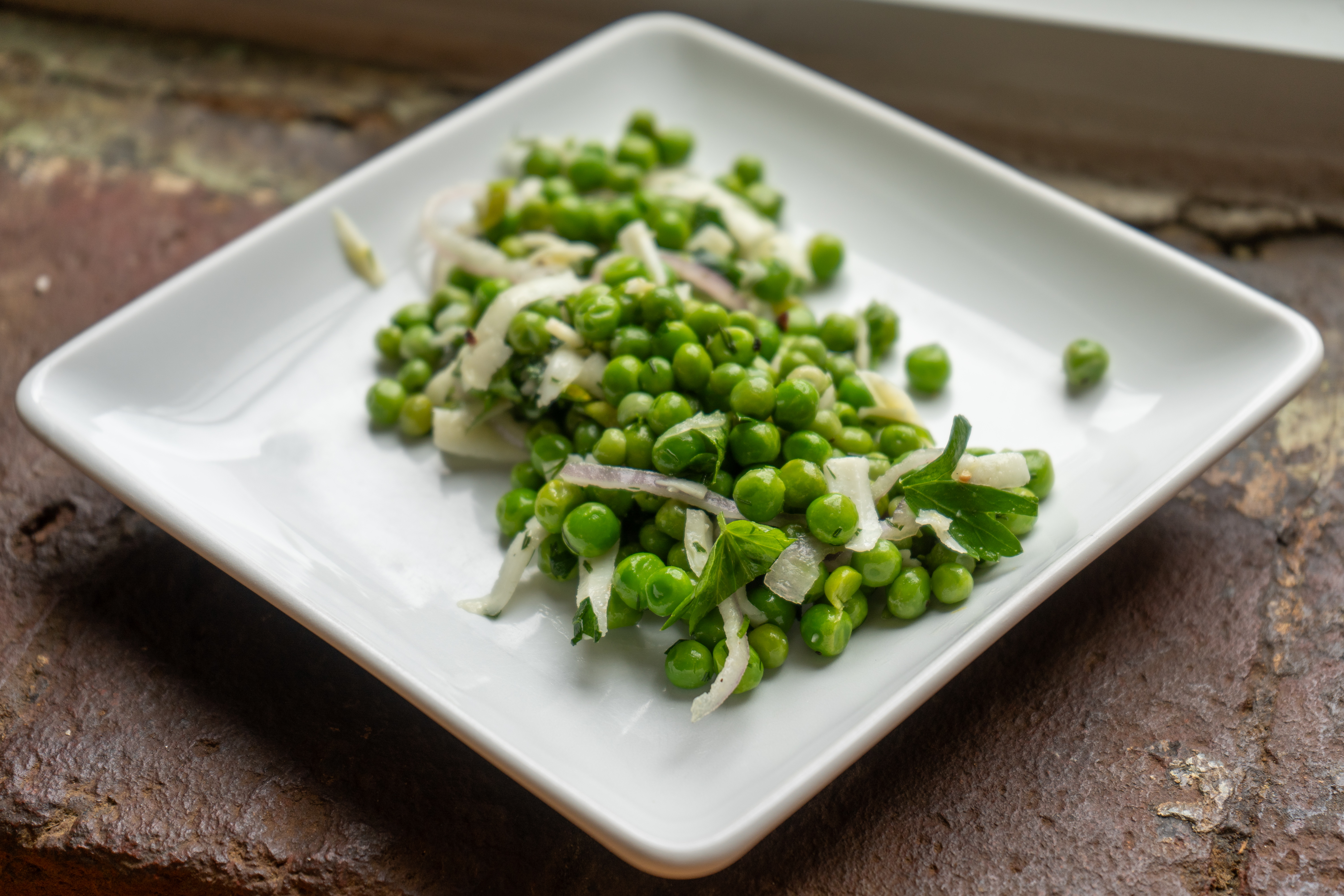
I’ve been a fan of Ellie Krieger, registered dietician and nutritionist, since finding her on the Saturday cooking marathons on our local PBS channel. Combining good basics of nutrition with accessibly creative cooking is an art form. This recipe, which was recently published in the Voraciously column of the Washington Post, takes full advantage of seasonal peas and is no exception to the delicious AND nutritious moniker.
With our somewhat late Spring arrival here in New England, I made a few adjustments: one is that I used thawed frozen peas. I thought this made a delightful alternative to fresh peas and, consequently makes this a year-round salad offering. I’d strongly advise using fresh herbs and fresh lemons over dried or dehydrated or reconstituted. There is no comparison.
Fresh peas are a definite sign of spring, and when the weather and temperatures are less-than-cooperative, this creative salad can be a good reminder that better weather is just around the corner.
Ingredients
2 cups (10 oz) shucked English peas (about 2 lbs) I used thawed frozen peas
1/4 cup thinly sliced red onion
2 tsp fresh flat leaf parsley
1 TBSP chopped fresh dill
2 TBSP olive oil
1 tsp lemon zest
1 TBSP fresh lemon juice
1/4 tsp salt
1/4 tsp black pepper
1/4 cup (about 3/4 oz) thinly shave pecorino Romano (suggestion that Parmesan would be a good substitute)
Method
If using fresh peas, you’ll need to shuck them. Rinse and pat dry.
Place peas, onion, parsley, dill, oil, lemon zest, lemon juice, salt and pepper in a large bowl.
Toss to combine. Let sit about 15 minutes to let the flavors meld.
We are finally getting some summer-like weather in New England, and to celebrate I took this opportunity to serve a chilled soup. This recipe was adapted by Tejal Rao, a NYTimes contributor, from an original by Erin French, founder of Lost Kitchen in Freedom, Maine.
I definitely will be revisiting this recipe for a couple of reasons, and high on that list is that I absolutely love beets. While this version called for golden beets, I will be playing with other varieties as well.
Original recipe from Erin French, Adapted by Tejal Rao
Ingredients:
1 tbsp finely chopped shallots
1 tbsp rice wine vinegar
2 tbsp olive oil, plus more for serving
Ground black pepper
2-½ lbs golden beets (I followed the recipe, but will definitely experiment with other varieties)
1 tsp salt
2 c buttermilk
½ lemon, juiced (about 1 tablespoon) (use a fresh lemon!)
Small handful of basil leaves, for serving
Small handful of dill fronds, for serving (I skipped this b/c I didn’t have fresh dill on hand)
⅓ to ½ c sour cream, for serving (I used plain Greek yogurt)
Method
In a small bowl, combine chopped shallots and vinegar and let macerate for 20 minutes.
Whisk in 2 tbsp olive oil and season with a few grinds of black pepper. Set aside.
Put beets in a large pot over medium heat and add 1 teaspoon salt and enough water to cover. Boil for 25 to 40 minutes, depending on size, until tender when poked with the tip of a knife.
Drain beets and let cool, then peel off the skins with your fingers.
Cut 1 beet into a small, even dice, then add to the shallot mixture & season with a pinch of salt (or to taste) and set aside.
Cut the remaining beets into large chunks and purée in a blender with buttermilk and lemon juice until smooth. Season to taste with salt and pepper. Refrigerate for 1 hour, or until completely cool. (As I mentioned in the headnote, this soup was even better cold and on the second day)
Ladle the soup into bowls and drizzle with a teaspoon of olive oil. Serve with marinated beets, herbs and sour cream (or in my case, Greek Yogurt) on the side.
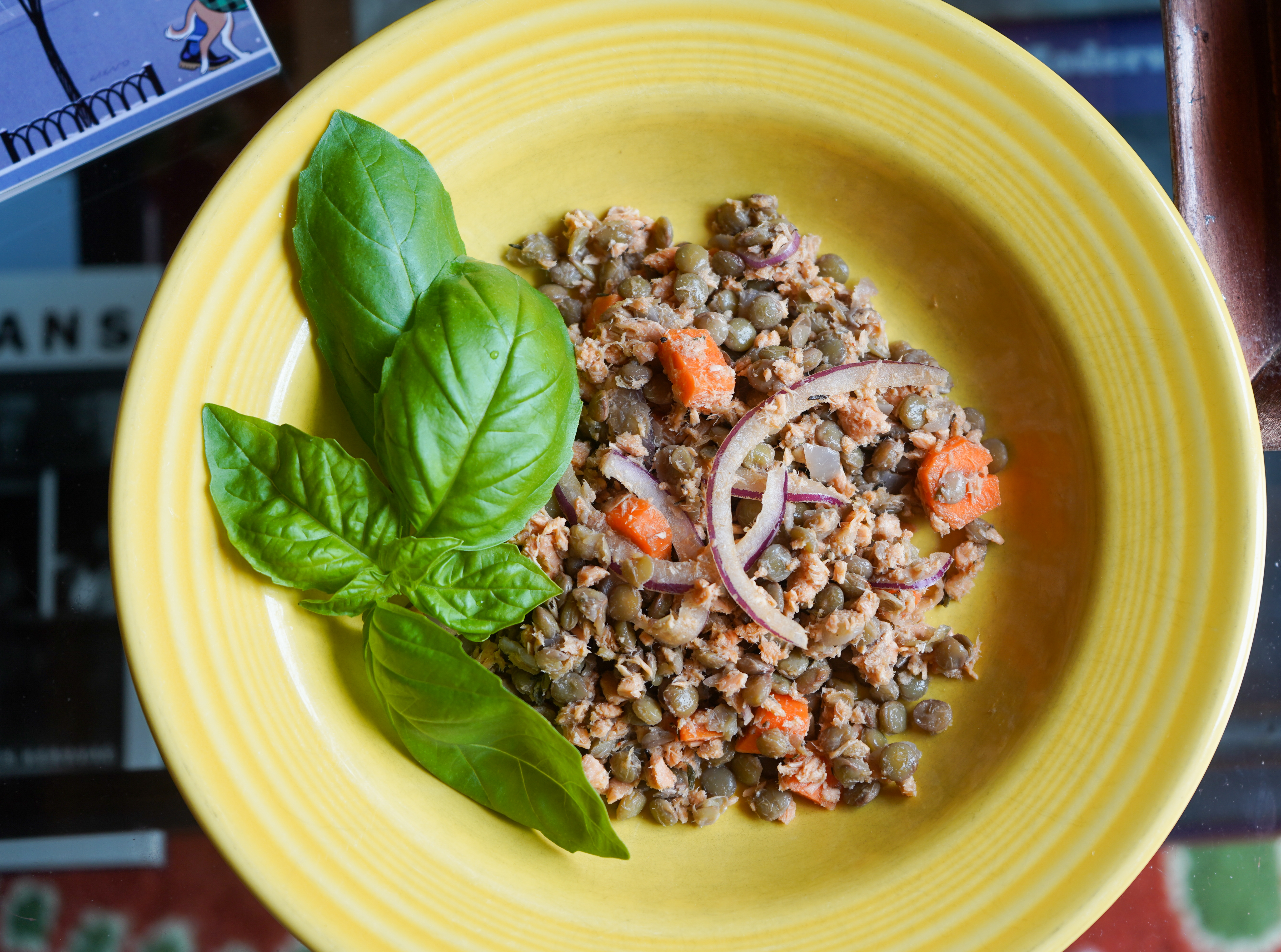
Ann Maloney is a Washington Post Recipes Editor and Food Reporter focused on, in her words, “quick and easy home cooking.” Honestly, what’s not to like here?
Her recipe for Quick Lentil Salmon Salad is adapted from Cooking Light and comes together in about the same time as it takes to cook the lentil. It can be served either warm or cold. Now that’s what I would call a great weeknight, homecooked meal.
Ingredients:
For the lentils
1 cup (7 ounces) brown lentils
1/2 cup chopped red onion
1 bay leaf
1/2 teaspoon dried oregano
For the dressing
2 cloves garlic, grated or minced (about 2 teaspoons)
1/4 teaspoon fine salt, plus more to taste
1/4 cup extra-virgin olive oil
3 tablespoons red wine vinegar
3/4 teaspoon dried thyme
1/4 teaspoon sweet paprika
1/2 teaspoon ground pepper, plus more to taste
For the salad
15 ounces canned salmon, drained, or 15-ounce cooked salmon fillet
1/4 cup thinly sliced red onion
1 cup diced carrot (about 1 large carrot)
4 lemon wedges, for serving (optional)
Method:
Make the lentils:
In a medium saucepan, combine the lentils, onion, bay leaf and oregano.
Add enough water to cover the lentils by a scant 1 inch and bring to a boil over high heat.
Reduce the heat to low and simmer until the lentils are just tender, 10 to 12 minutes.
Drain well and spread the lentils on a large flat platter or rimmed baking sheet. Let cool for about 10 minutes.
Make the dressing (While the lentils are cooking):
Mash the garlic and salt into a paste with the side of a chef’s knife (or a fork).
In a medium bowl, whisk together the oil, vinegar, mashed garlic, thyme, paprika and pepper.
Taste, and season with more salt and/or pepper as desired.
Assemble the salad:
Remove any skin and/or bones from salmon, if necessary, transfer it to a large bowl and flake into pieces.
Add the sliced onion, carrot and 3 tablespoons of the dressing.
Gently toss to coat.
Add the lentils to the remaining dressing; gently stir to combine.
Divide the lentils among 4 bowls and top with the salmon salad. Serve chilled or at room temperature, with lemon wedges.
Our Mother’s Day celebrations are a bit more low-key than most with family members spread across the continent. Usually I’ve brought something breakfast-like to my own Mom’s house and indulged in a quick visit. This year, I was looking for a sweet treat to bring and discovered this delicious coffee cake on King Arthur Baking’s recipe website.
I’ve nearly abandoned using mixes and other shortcuts to baking since 2020, preferring to bake things from scratch. So, while the 12 steps (16 if you add a confectioner’s sugar glaze – which I passed on) to this recipe may seem daunting, I’d encourage bakers to give it a try. The result was really outstanding and my only tweak for the next time will be to more carefully determine what “half” the cake batter is (maybe even measure!) so that the filling is better distributed.
Also true: the Cinnamon-Crisp Coffee Cake recipe is a recipe of the year. King Arthur Baking links to variations on this theme, so if you’re like me, this recipe will go into a regular rotation for every season
After a short period of travel and a break from cooking, we’ve been a bit lax in home cooking.
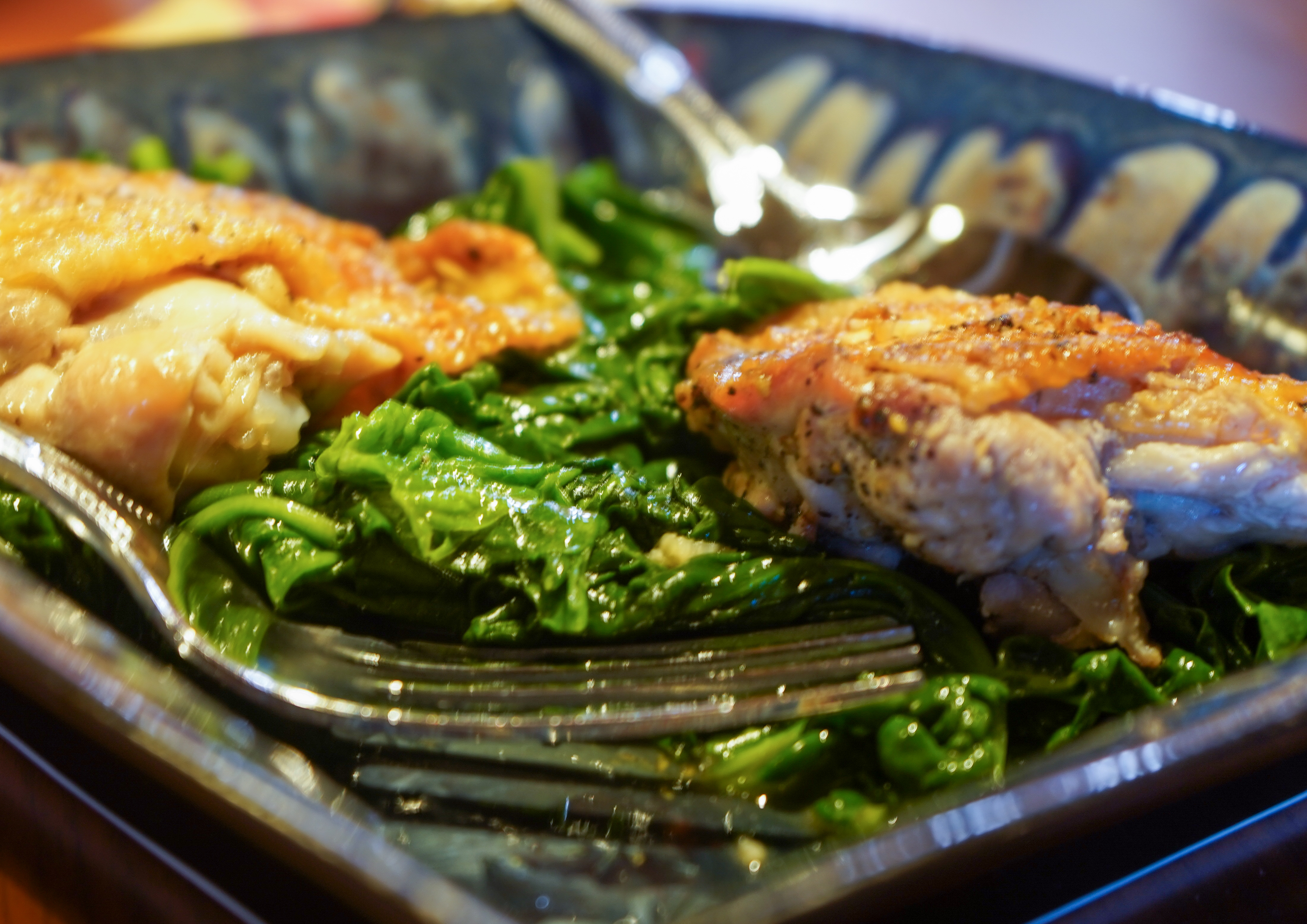
Last night’s dinner was inspired by a video posted on Jacques Pepin’s Instagram, his regular “Budget Tuesday” offering. I am frequently in awe of Chef’s ability to instruct those of us who are not professionals in the kitchen AND show how delicious meals can be produced in a home kitchen. This meal, Chicken Thighs over Steamed Spinach, was everything a good home meal should be: simple, quick (30 mins start to finish), and most of all, tasty.
I personally love how Chef is able to insert technique into every recipe. Not only his Jacques Pepin a master chef, he is a relatable teacher.
2 bone-in chicken thighs (skin attached) – that’s where the fat for the saute comes from)
fresh spinach (if I had to guess, I think I used about 4 cups, washed)
2 garlic cloves
Salt and Pepper to season
That’s it. How easy is this dish? Watch this quick video from Instagram (might also be available on other social media and the JPFoundation website) but basically it comes down to this:
Prepare the thighs by cutting loosening the meat (cut close to the bone on both sides). Salt & pepper the meat.
Brown the thighs 2-3 min, skin-side down, in a nonstick skillet (pick on that has a lid). Cover and cook over low heat for 20 minutes; do not turn the thighs over – keep the skin-side down.
After 20 minutes (I admit to using my food thermometer), check for doneness and remove the thighs.
Saute the 2 cloves of garlic in the drippings, add the fresh spinach and a tablespoon of water until the spinach wilts and serve.
King Arthur Baking has long been my go-to for quality and unusual baking ingredients. While I’m not always able to drive up to the company store, headquartered in Vermont, the King Arthur mail-order website and catalogs frequently feature new seasonal product that inspire. Such was true when I discovered their lemon crumbles. Think chocolate chips but not chocolate – a nice change up any time, but especially in the spring.
This lemon cookie recipe found on the back of the Lemon Crumbles package made a delightfully tart, refreshing cookie, just the ticket for those of us in New England awaiting some warm spring weather.
OPTIONAL 1/8-1/4 tsp lemon extract (I skipped this)
1 T fresh lemon juice (fresh is best)
1 egg (large)
Method:
Preheat oven to 350 degrees F. Grease or line with parchment – 2 baking sheets.
Stir together the flour, cornstarch, baking powder, salt, and lemon crumbles. Set aside.
In separate bowl (I did the rest of this in a stand mixer), beat together butter, sugars, and lemon zest. Beat until creamy.
Add vanilla extract, lemon extract (if using), lemon juice and egg. Beat until well incorporated.
Stir in the flour mixture until just combined.
Drop by tablespoonful onto prepared baking sheets, spacing 2 inches apart. Flatten slightly with a fork or the bottom of a glass dipped in granulated sugar.
Bake for 11-13 minutes until golden. Remove from oven and allow to cool 2 minutes before transferring to a cooling rack.





 Four Nights A Week